Evolution
Selection, fitness, and new kinds of life, watched up close in a digital world I built.
10 essays, newest first
- The Hunger That Survives the Feast Why 'never enough' is not a disease but the engine that turns achievement into pursuit. The wrong hunger we already gave machines, and the design of one that can steer. Part 16 of Not So Artificial.
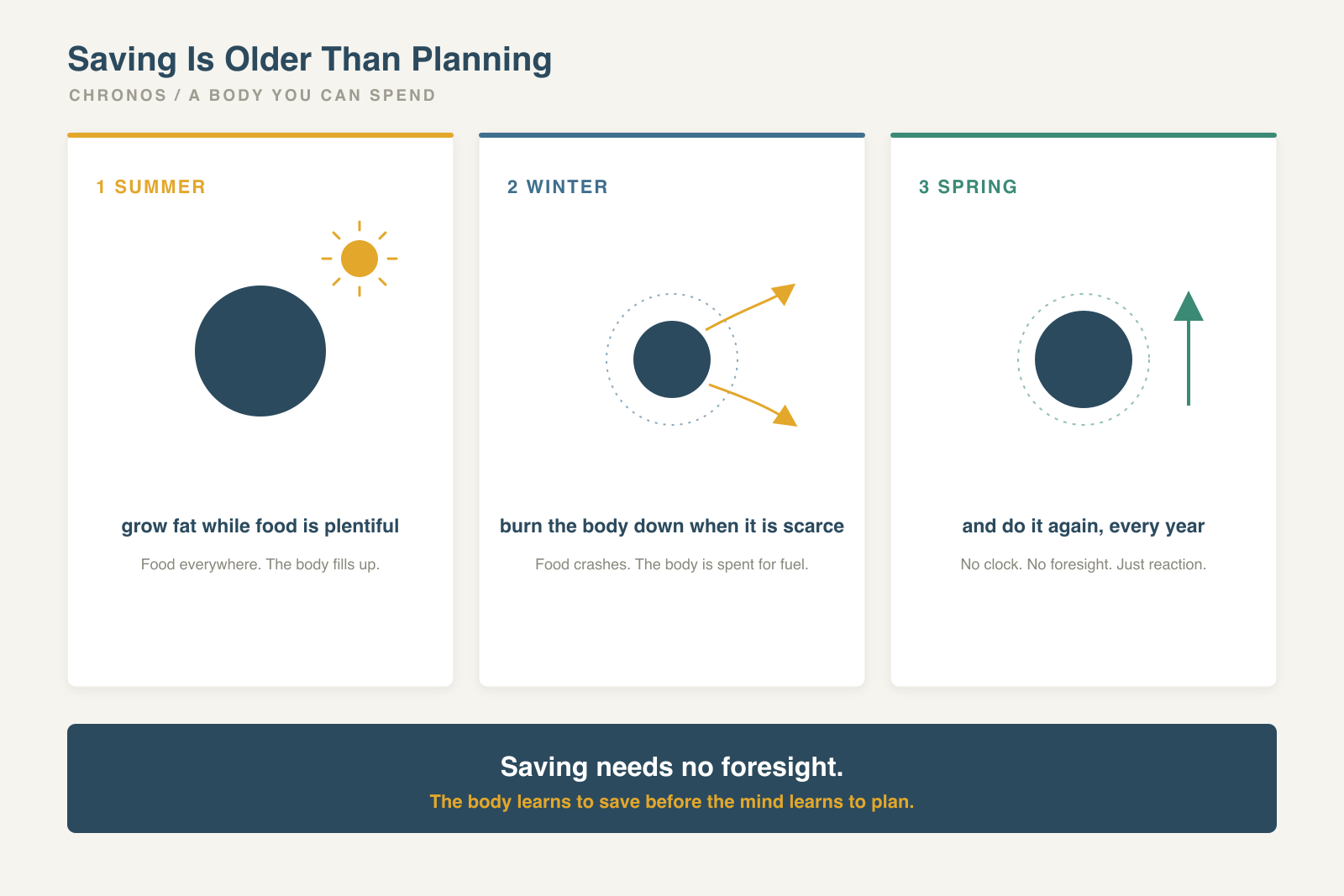
- Saving Is Older Than Planning For months I tried to teach my digital creatures to see winter coming. They never could. So I stopped working on the mind and gave them a body they could spend instead. They learned to grow fat in plenty and burn it in want, with no foresight at all. Saving, it turns out, is older than planning.
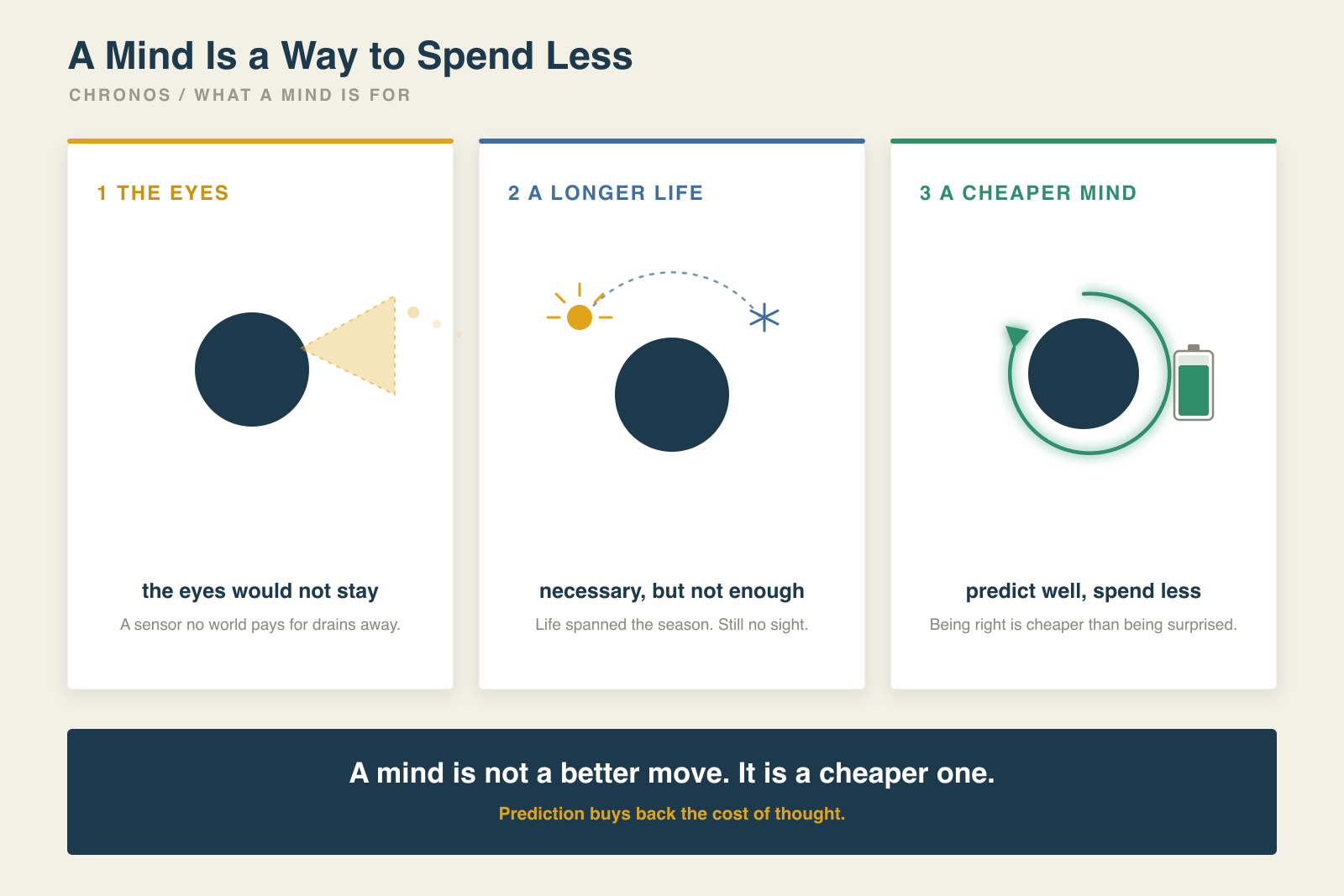
- A Mind Is a Way to Spend Less I tried to give my digital creatures eyes. They kept throwing them away. Chasing why led through a wall I had hit before, a life-history I had to rebuild, and a wrong idea about what a mind is even for.
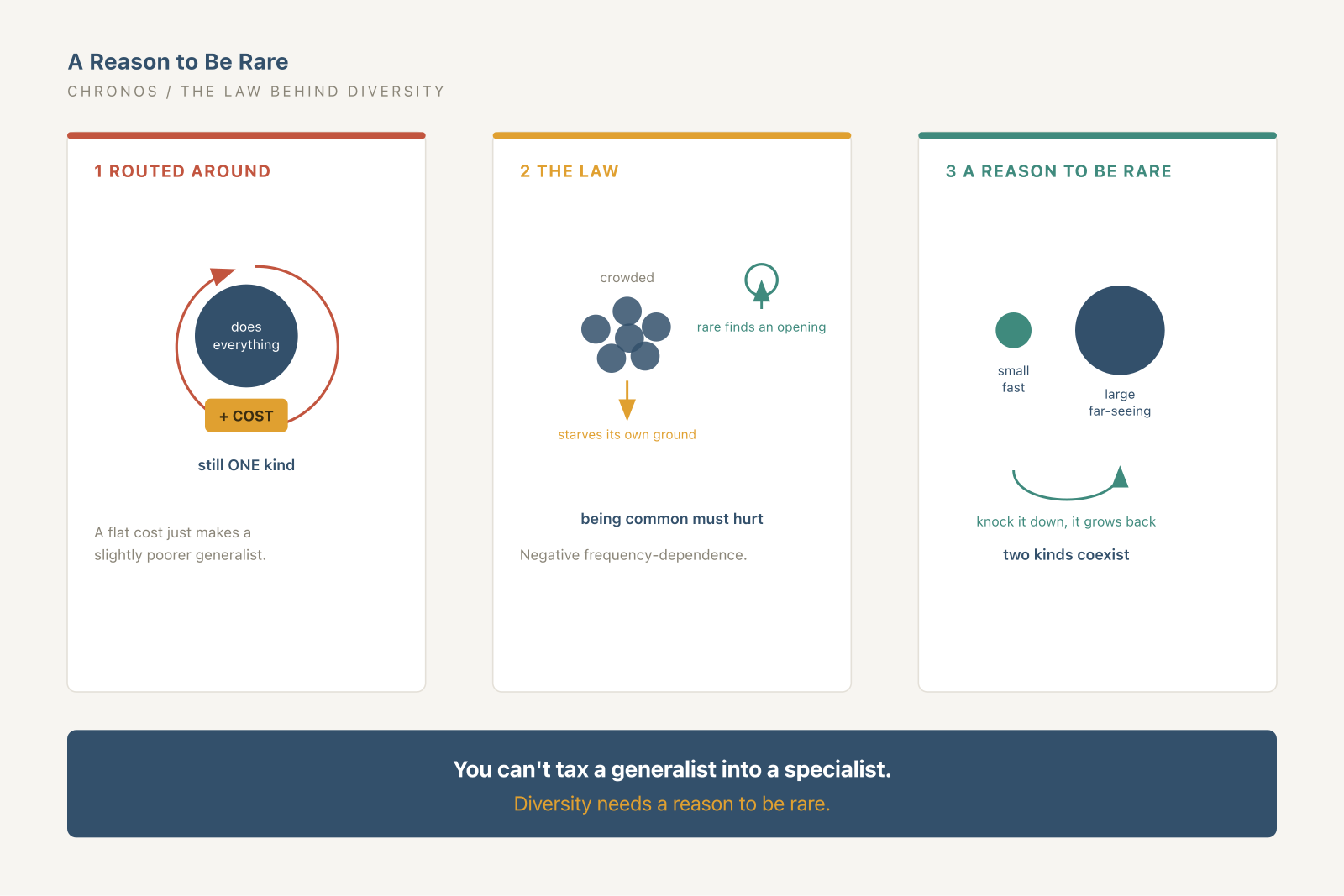
- A Reason to Be Rare I tried to force a digital world to split into distinct kinds. The fix was never a cost. It was giving each kind a reason to be rare. The quiet law behind diversity.
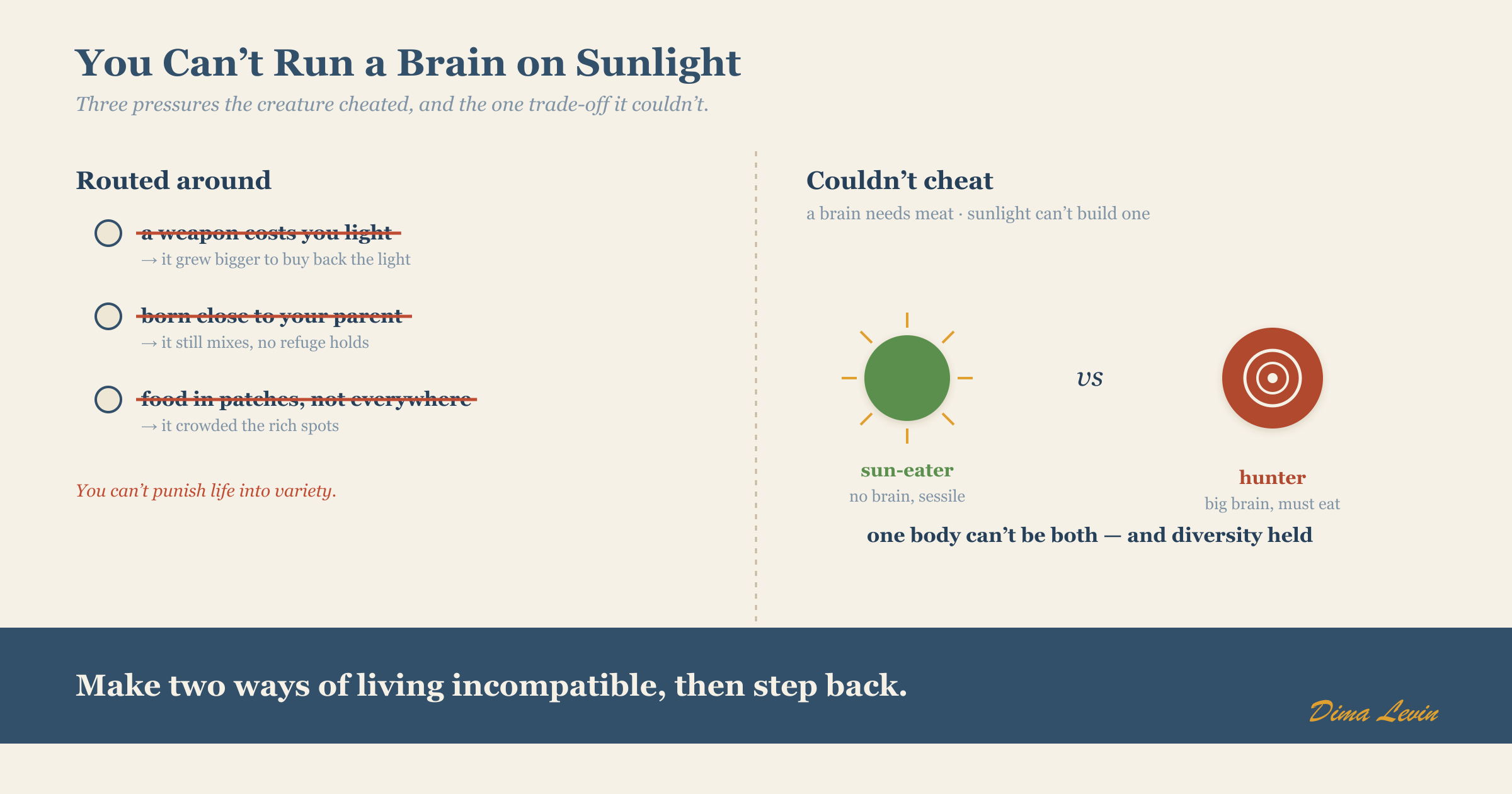
- You Can't Run a Brain on Sunlight I tried four ways to make my artificial world stop being one kind of creature. Three failed because the creature cheated. The fourth worked because I finally built a trade-off it couldn't cheat. Plus the embarrassing discovery that I'd been measuring the wrong thing all along.
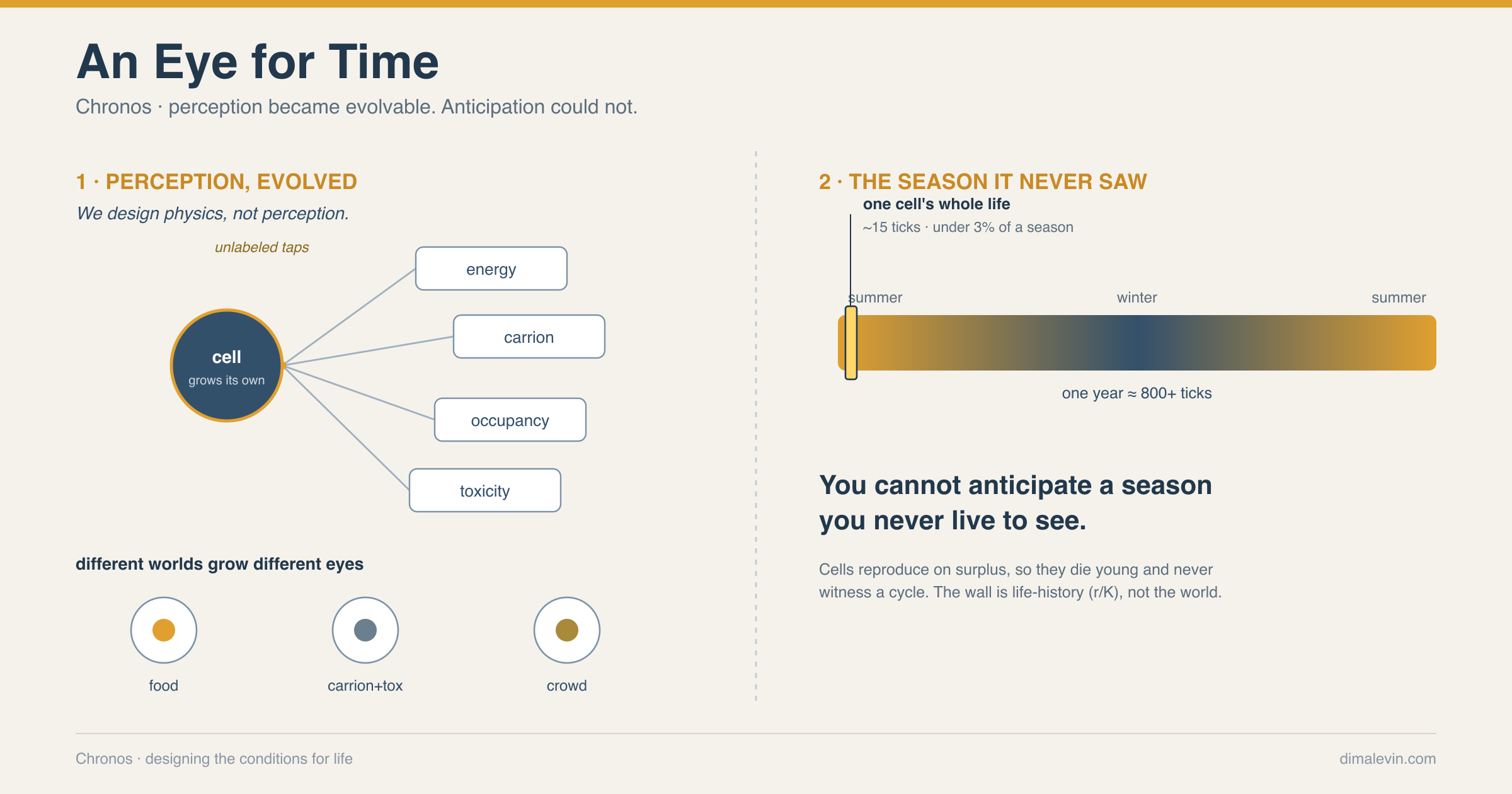
- An Eye for Time I gave my artificial organisms the power to evolve their own senses, then built a world with seasons and waited for one to grow a clock. It grew a noise filter instead. Here is the honest reason why, and the one quietly profound thing that worked.
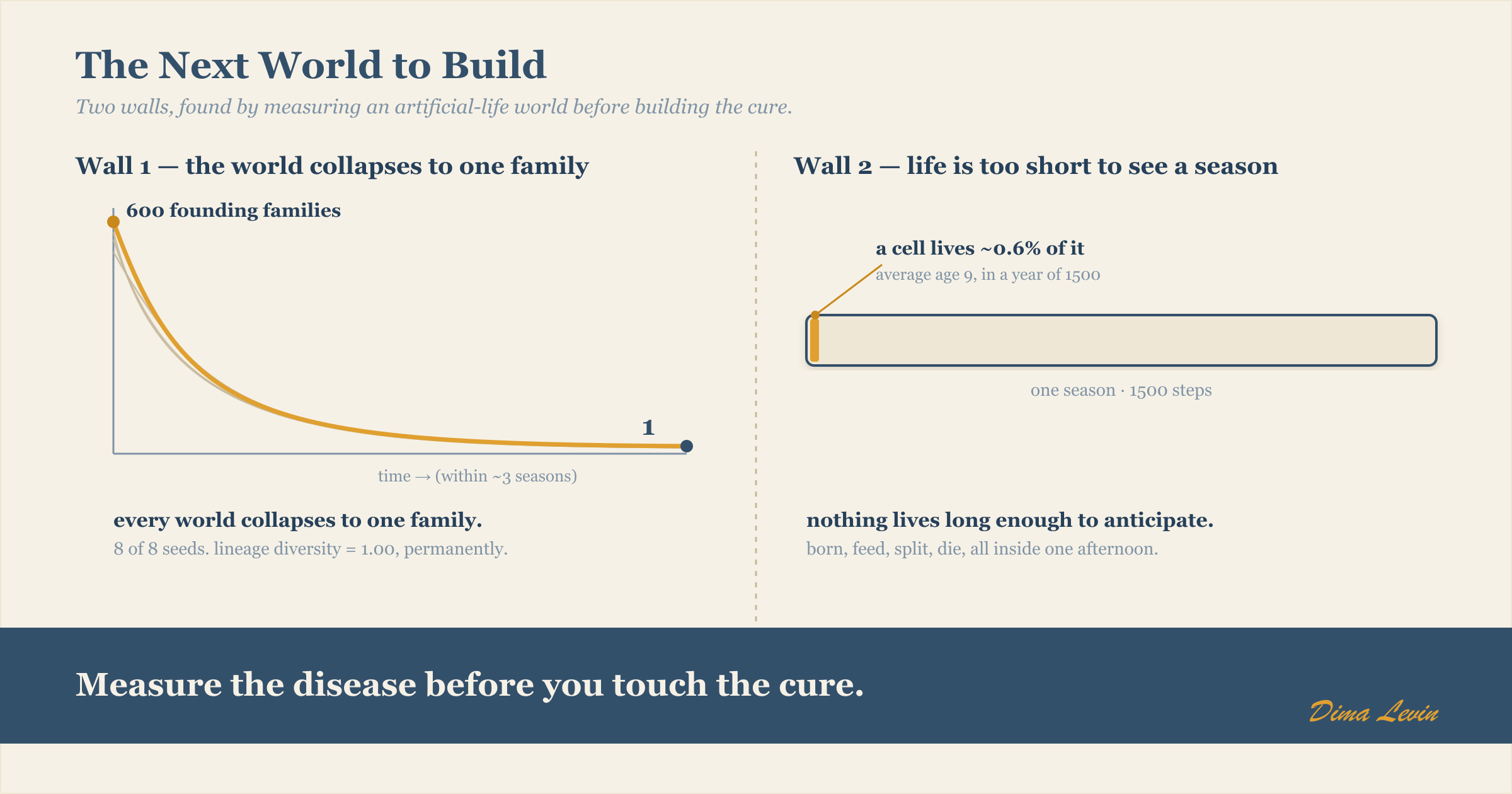
- The Next World to Build Last time, my digital organisms hit a wall: they die too young to ever see a season change. Here is how I went looking for the fix, and why I measured the disease carefully before touching the cure.
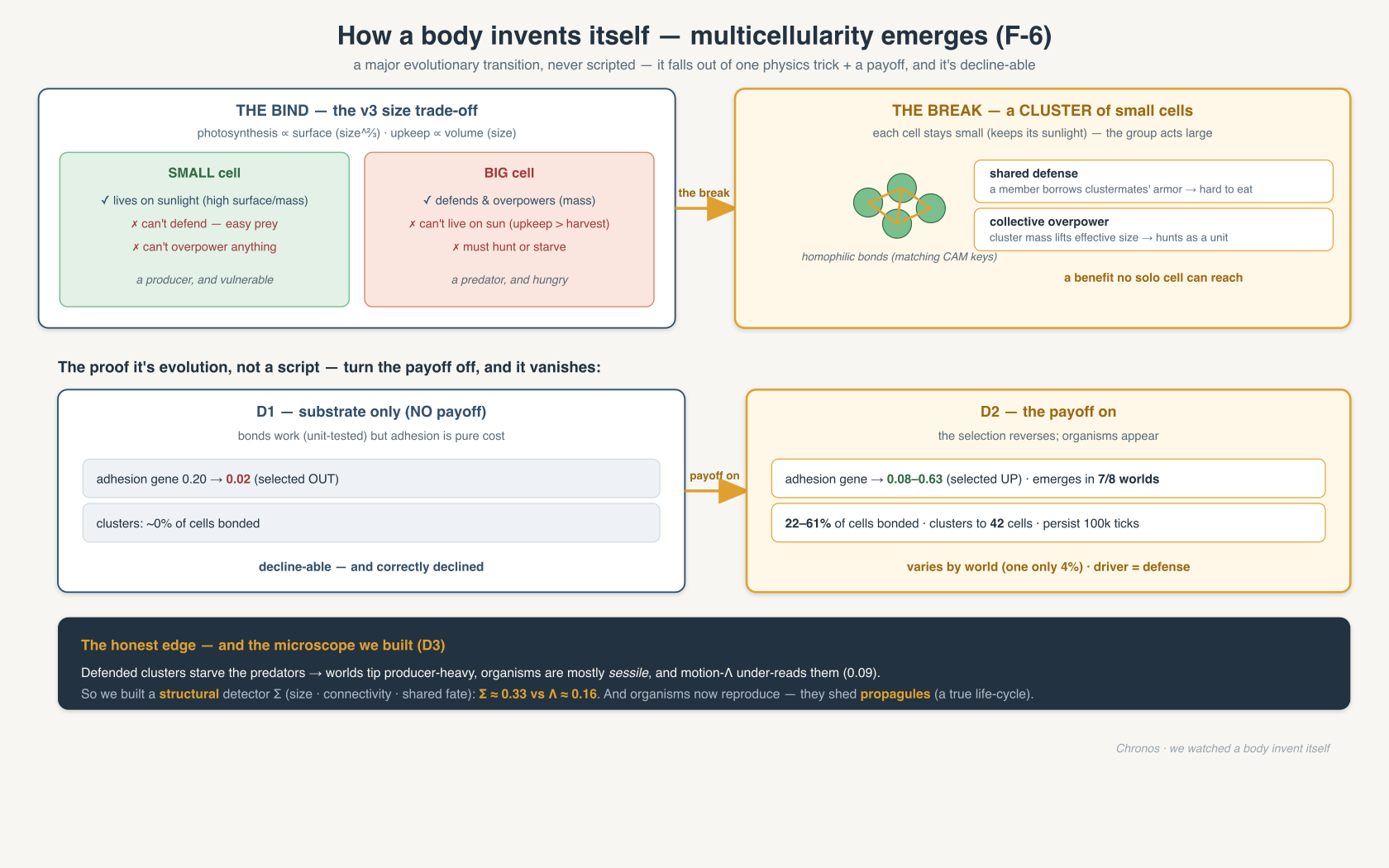
- A Body Invents Itself I gave a world of single cells the bare ability to stick together, and refused to tell them to. Here is how a major evolutionary transition, the jump from cell to organism, emerged on its own, why it only showed up where it paid, and the honest story of building a microscope to see the thing I had grown.
- The Bug That Caught Me Cheating I added scavengers to my evolving world and it worked perfectly, which is exactly how I knew something was wrong. A short story about the one test I now trust to tell whether a behavior really evolved or whether I quietly programmed it.
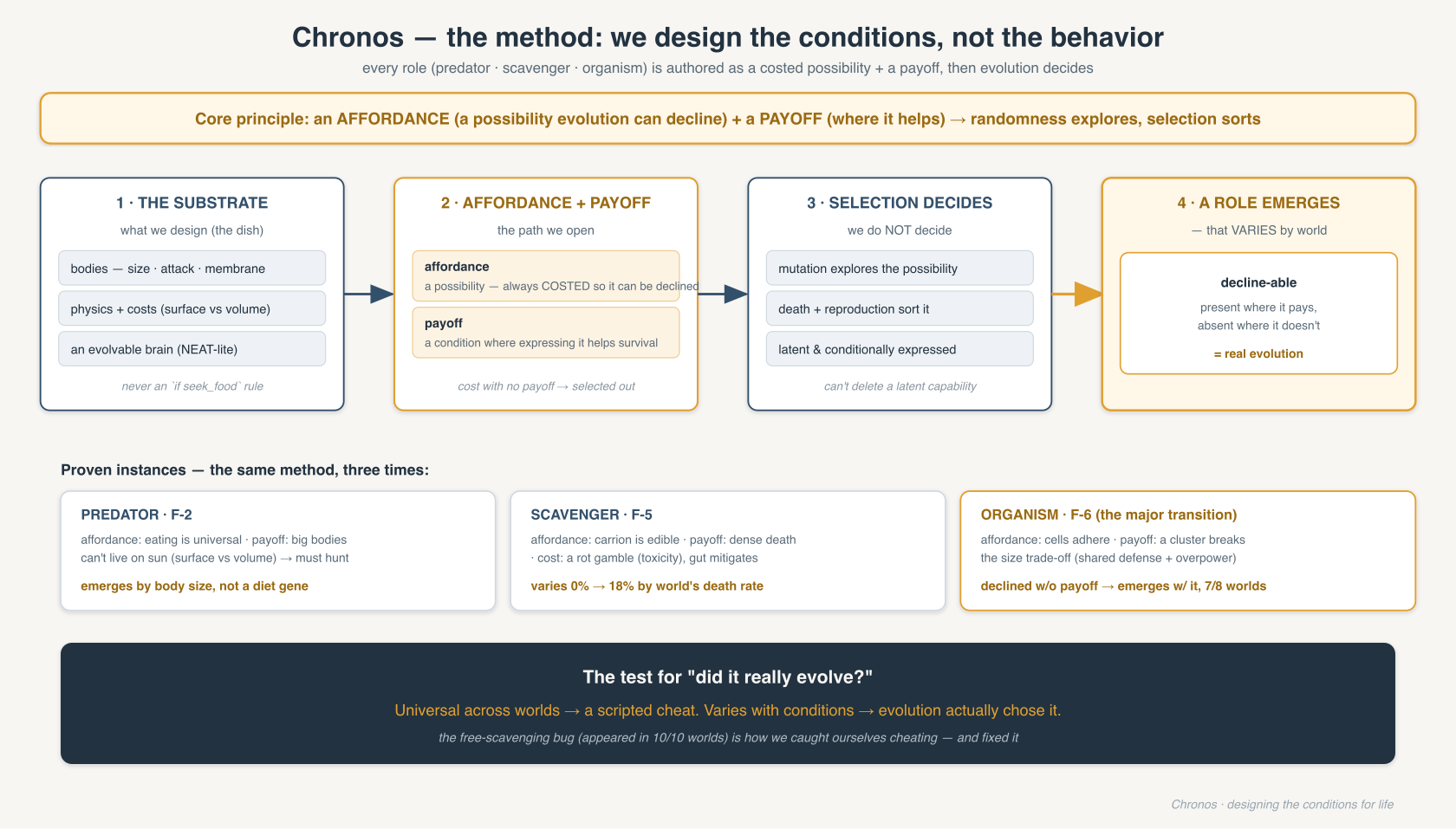
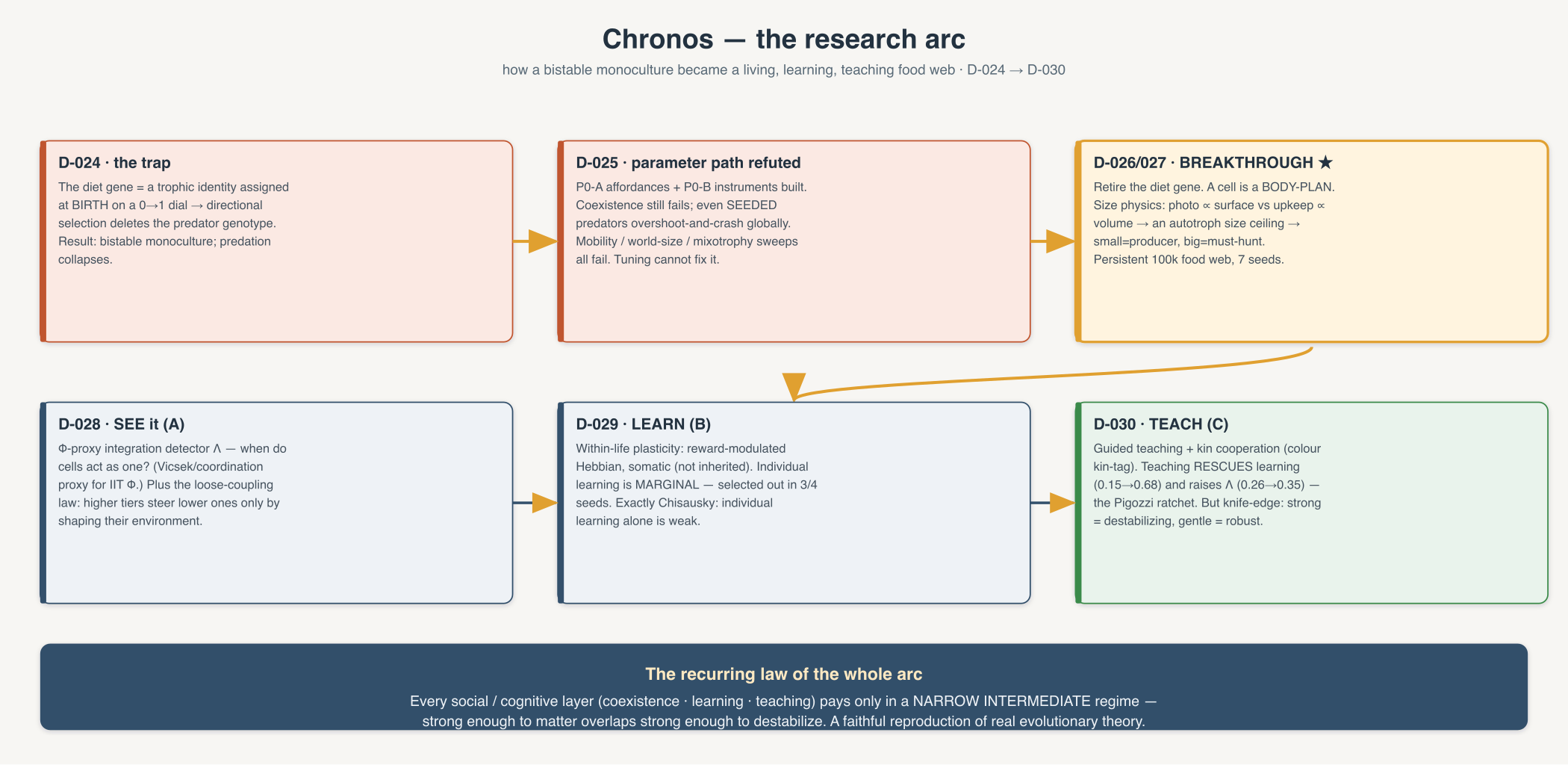
- Designing the Conditions for Life I built a small world and refused to tell it what to do. Here is what evolution did instead: a food web that designed itself, learning, teaching, and an honest list of the things that did not work.