Writing / Series
Chronos
A universe small enough to fit on my laptop, and strict enough to surprise me. One rule: I design the physics, and I never tell the creatures what to do.
Then I watch. Across these essays a dead soup comes alive. It grows a food web nobody designed. Cells learn, and teach. They stick together and cross the oldest threshold in biology, from single cell to organism, without being asked. And then the world refuses, for a long stubborn while, to do the one thing I most wanted: split into distinct, coexisting kinds. Why it refused, and what finally broke the deadlock, is the spine of the series.
Every win here is real because every failure is too. I spend as much time building the instrument that could prove me wrong as building the world itself, and more than once it has caught me fooling myself. Read them in order, the way the world actually grew. Start at the beginning.
- Designing the Conditions for Life I built a small world and refused to tell it what to do. Here is what evolution did instead: a food web that designed itself, learning, teaching, and an honest list of the things that did not work.
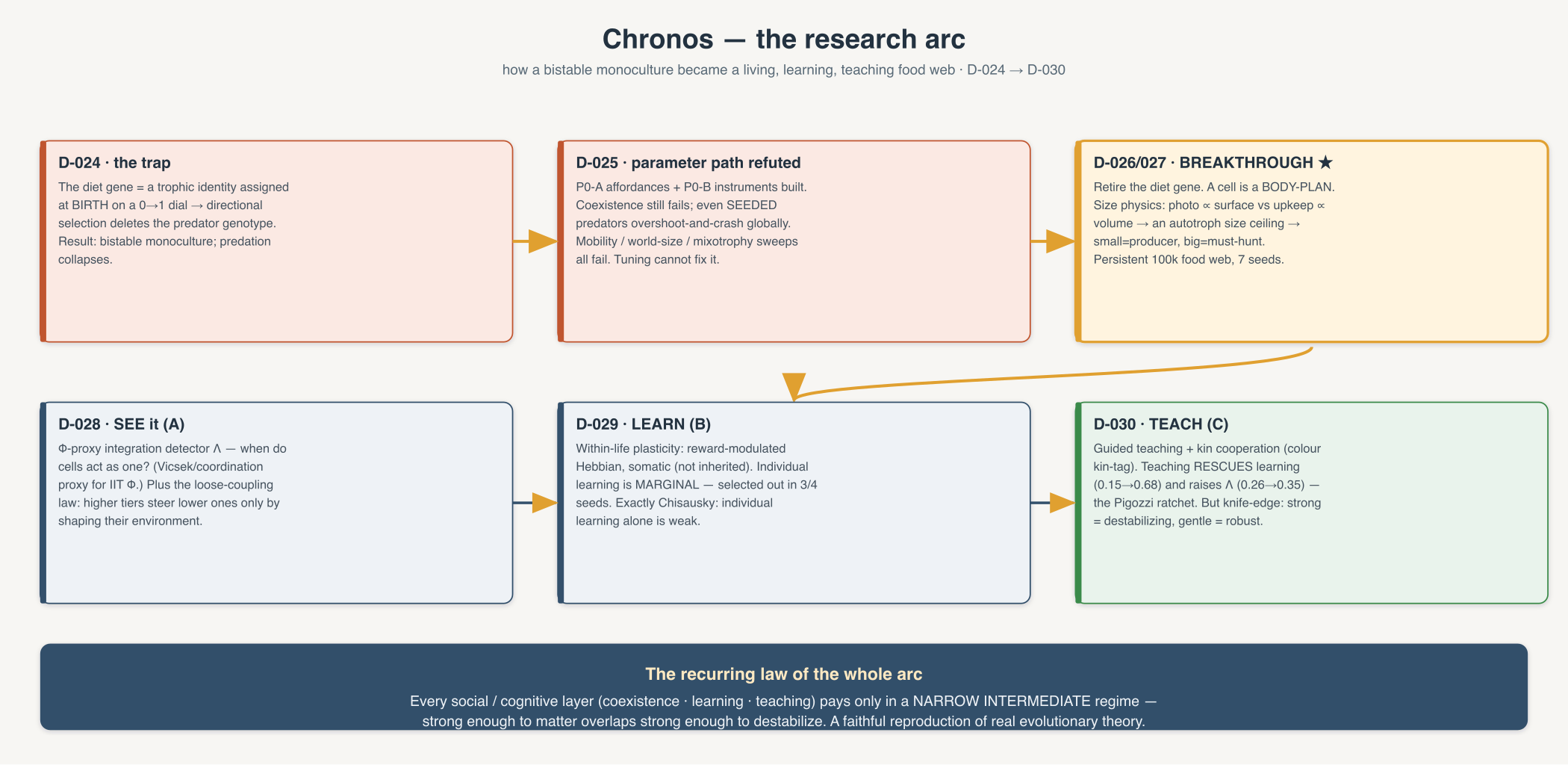
- The Bug That Caught Me Cheating I added scavengers to my evolving world and it worked perfectly, which is exactly how I knew something was wrong. A short story about the one test I now trust to tell whether a behavior really evolved or whether I quietly programmed it.
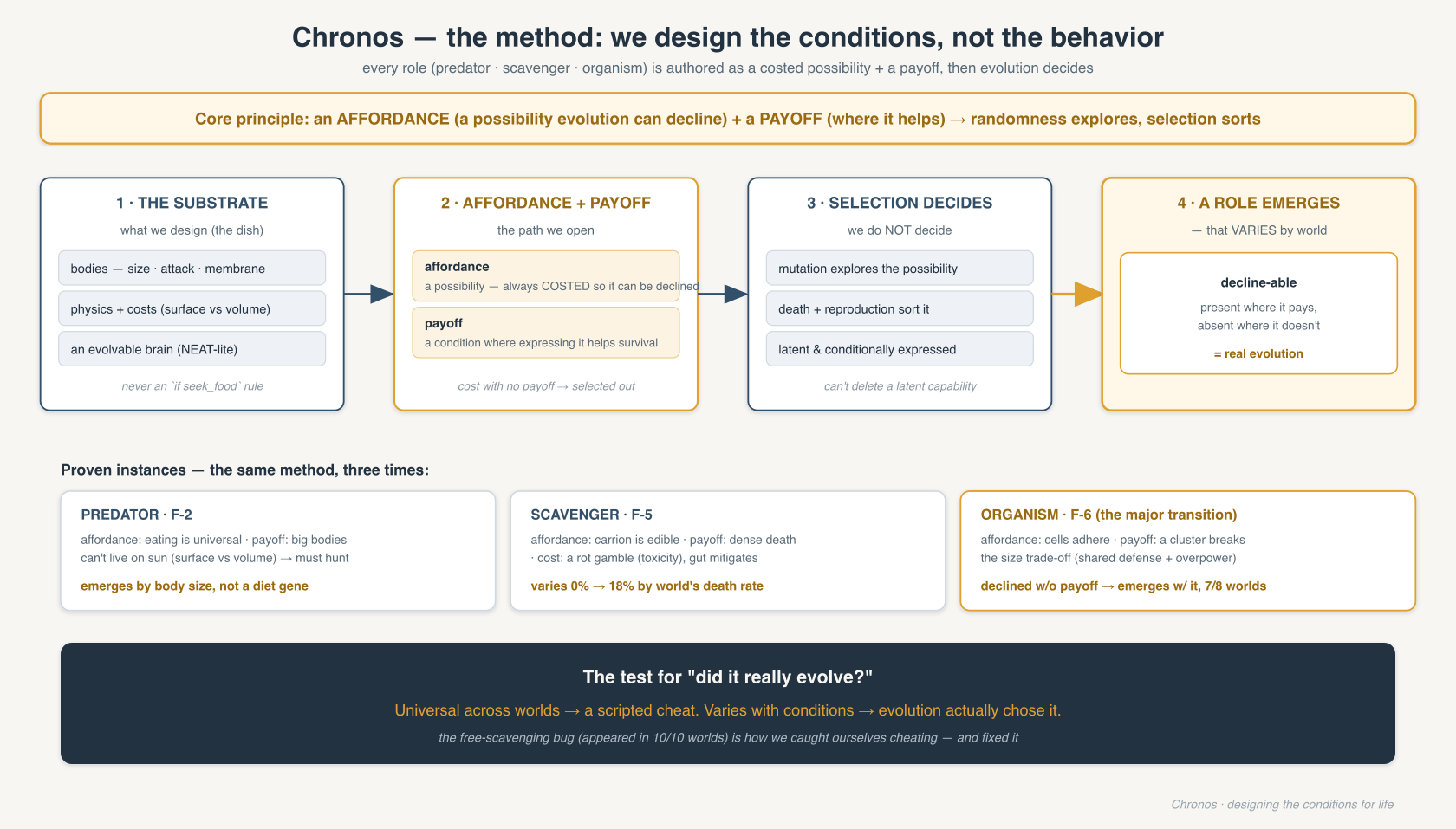
- A Body Invents Itself I gave a world of single cells the bare ability to stick together, and refused to tell them to. Here is how a major evolutionary transition, the jump from cell to organism, emerged on its own, why it only showed up where it paid, and the honest story of building a microscope to see the thing I had grown.
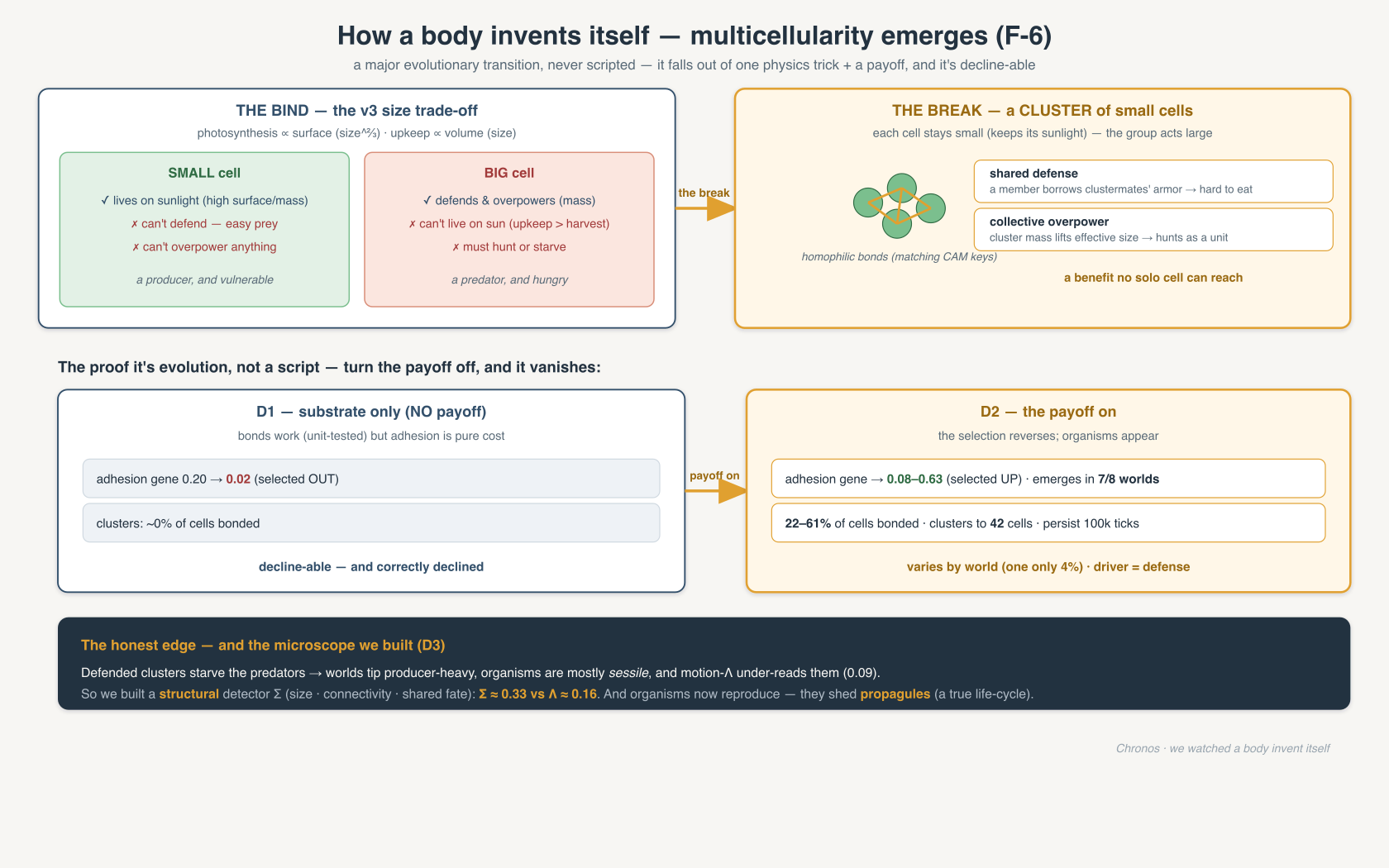
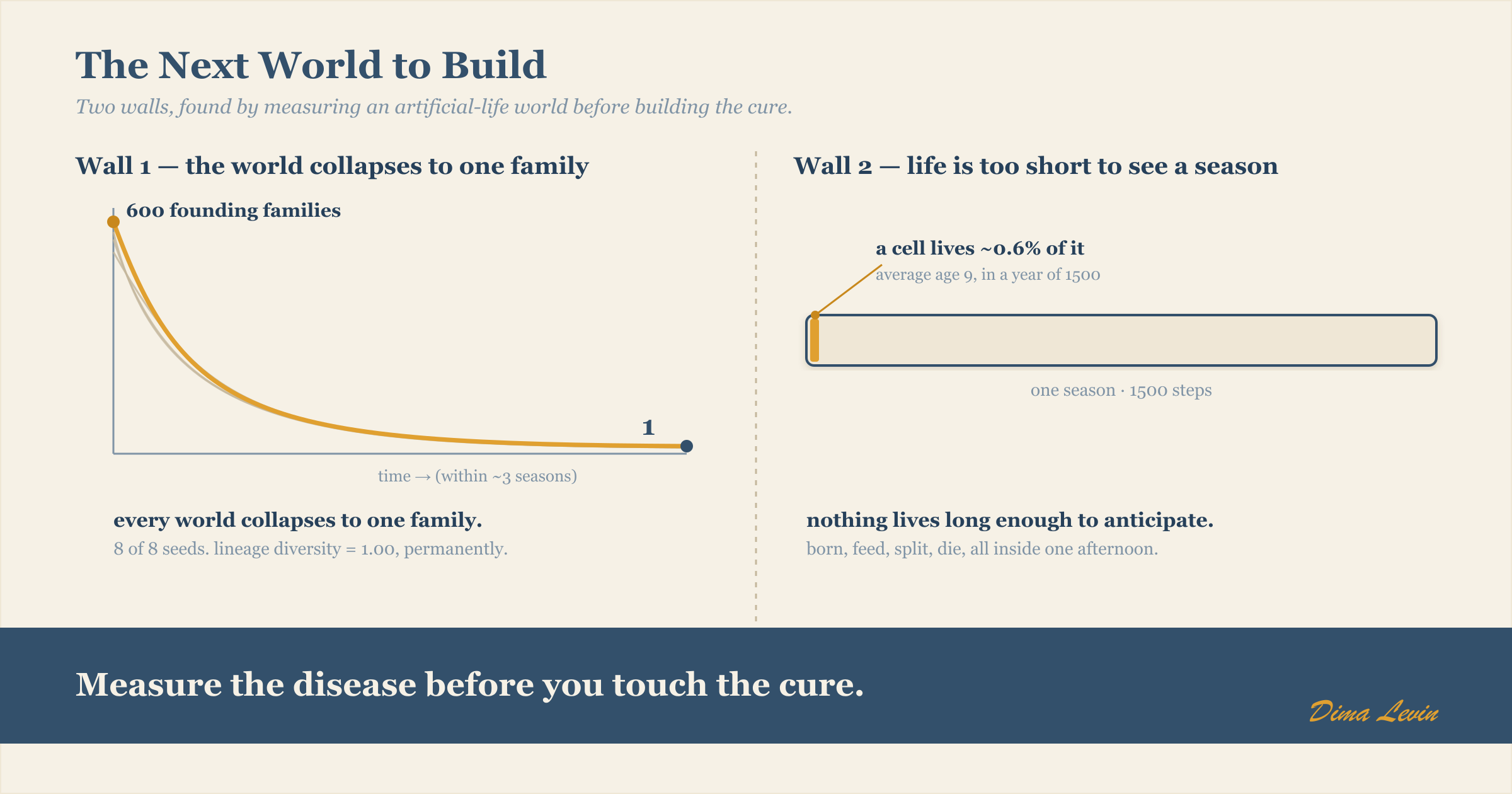
- The Next World to Build Last time, my digital organisms hit a wall: they die too young to ever see a season change. Here is how I went looking for the fix, and why I measured the disease carefully before touching the cure.
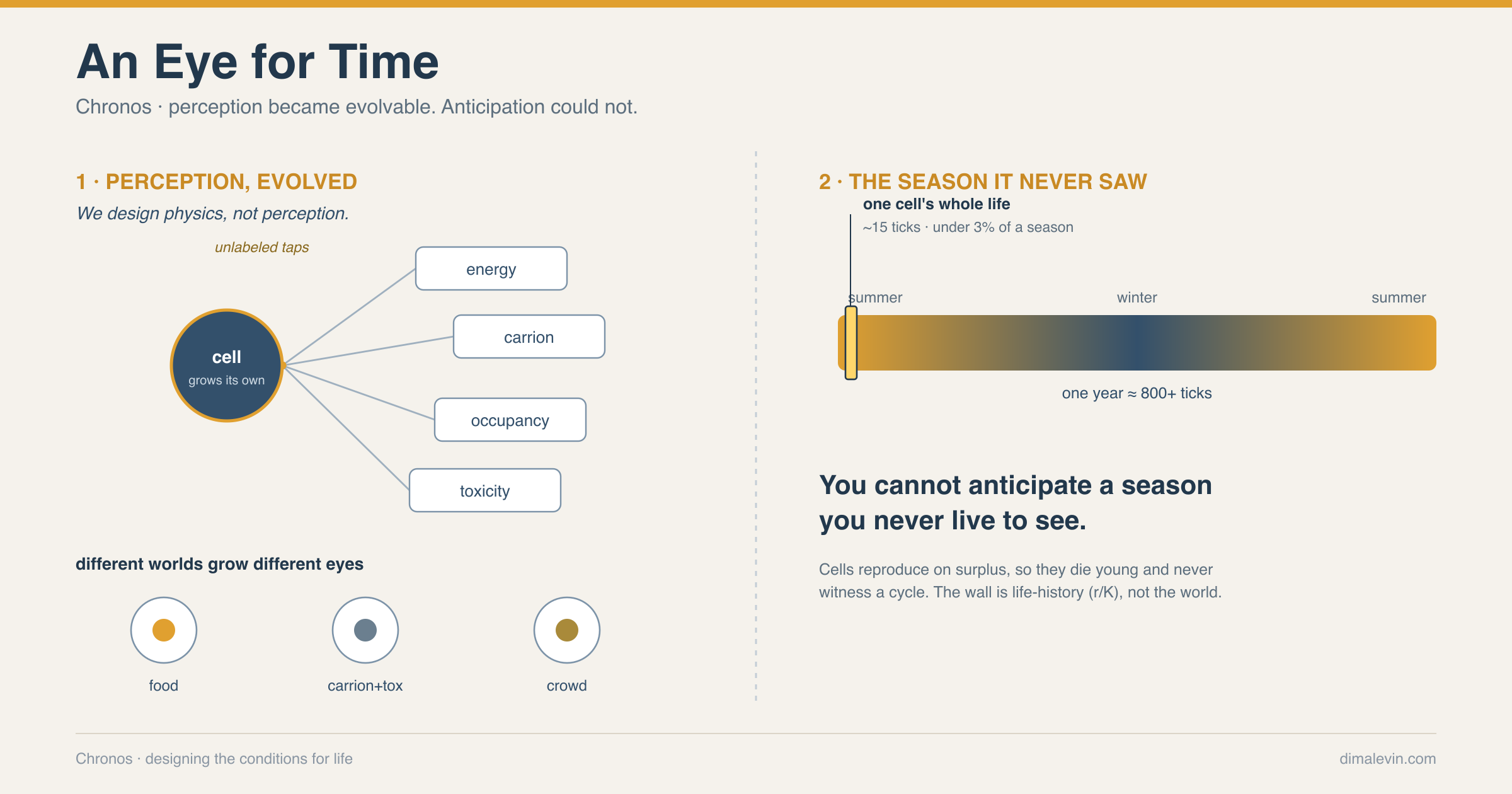
- An Eye for Time I gave my artificial organisms the power to evolve their own senses, then built a world with seasons and waited for one to grow a clock. It grew a noise filter instead. Here is the honest reason why, and the one quietly profound thing that worked.
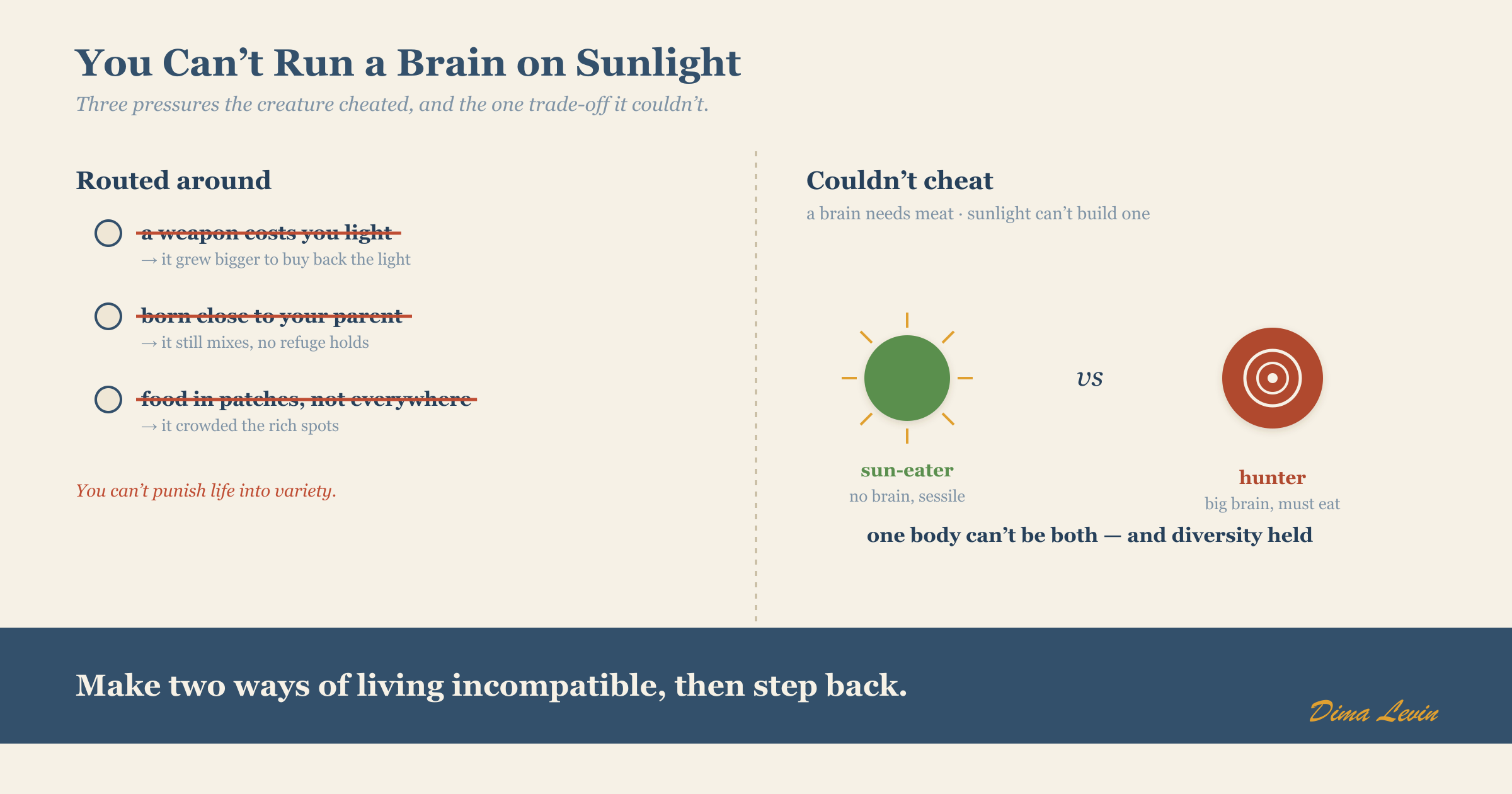
- You Can't Run a Brain on Sunlight I tried four ways to make my artificial world stop being one kind of creature. Three failed because the creature cheated. The fourth worked because I finally built a trade-off it couldn't cheat. Plus the embarrassing discovery that I'd been measuring the wrong thing all along.
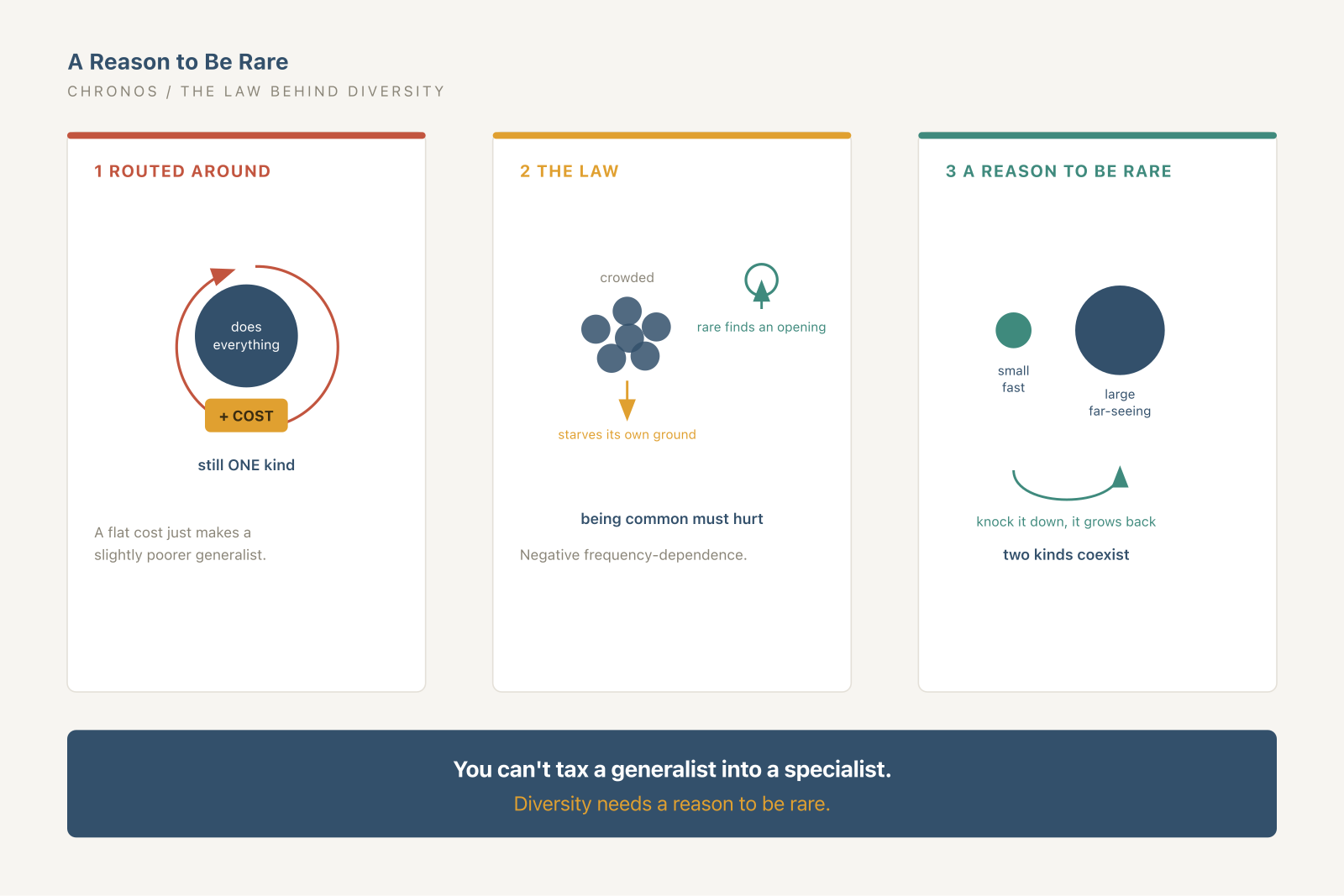
- A Reason to Be Rare I tried to force a digital world to split into distinct kinds. The fix was never a cost. It was giving each kind a reason to be rare. The quiet law behind diversity.
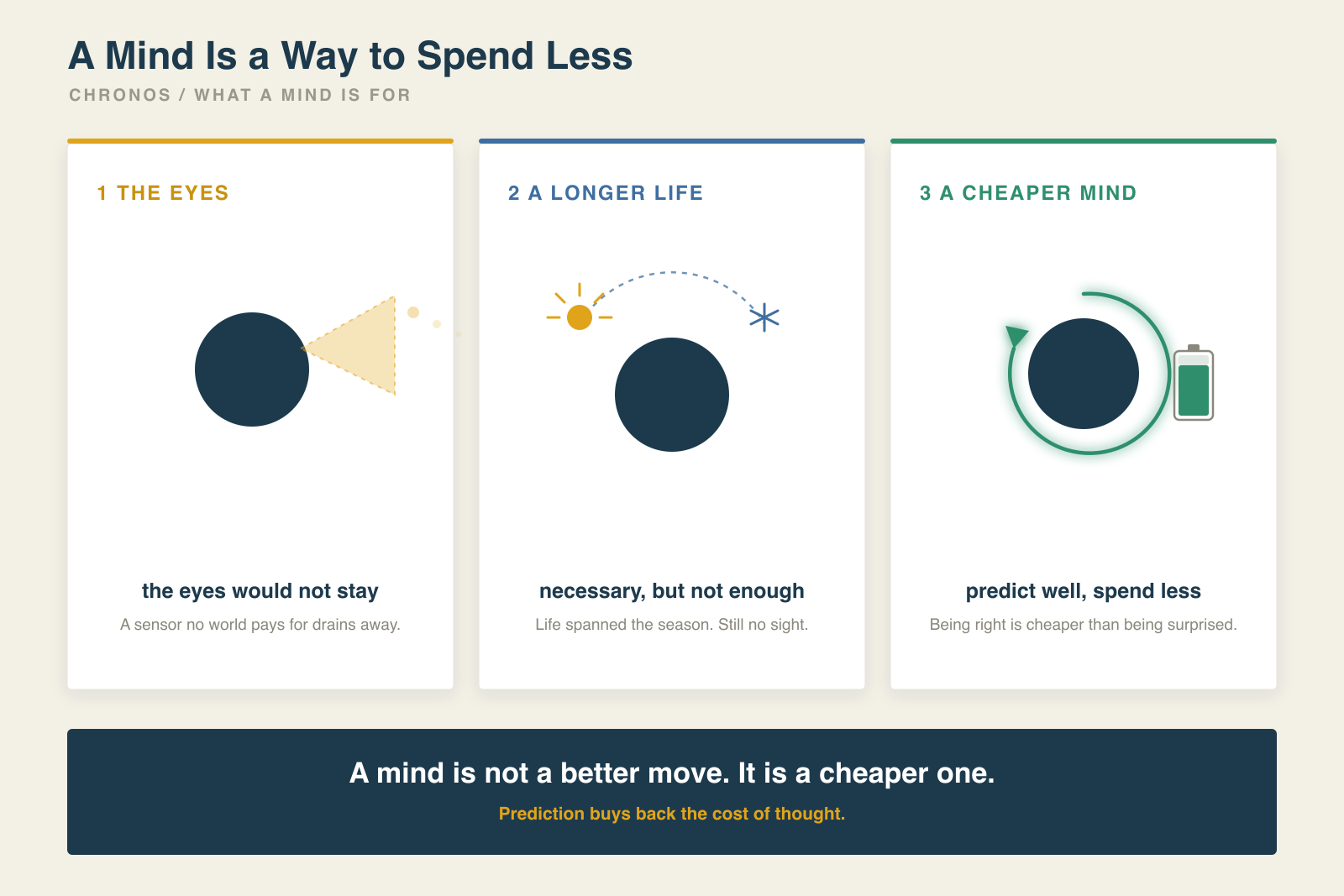
- A Mind Is a Way to Spend Less I tried to give my digital creatures eyes. They kept throwing them away. Chasing why led through a wall I had hit before, a life-history I had to rebuild, and a wrong idea about what a mind is even for.
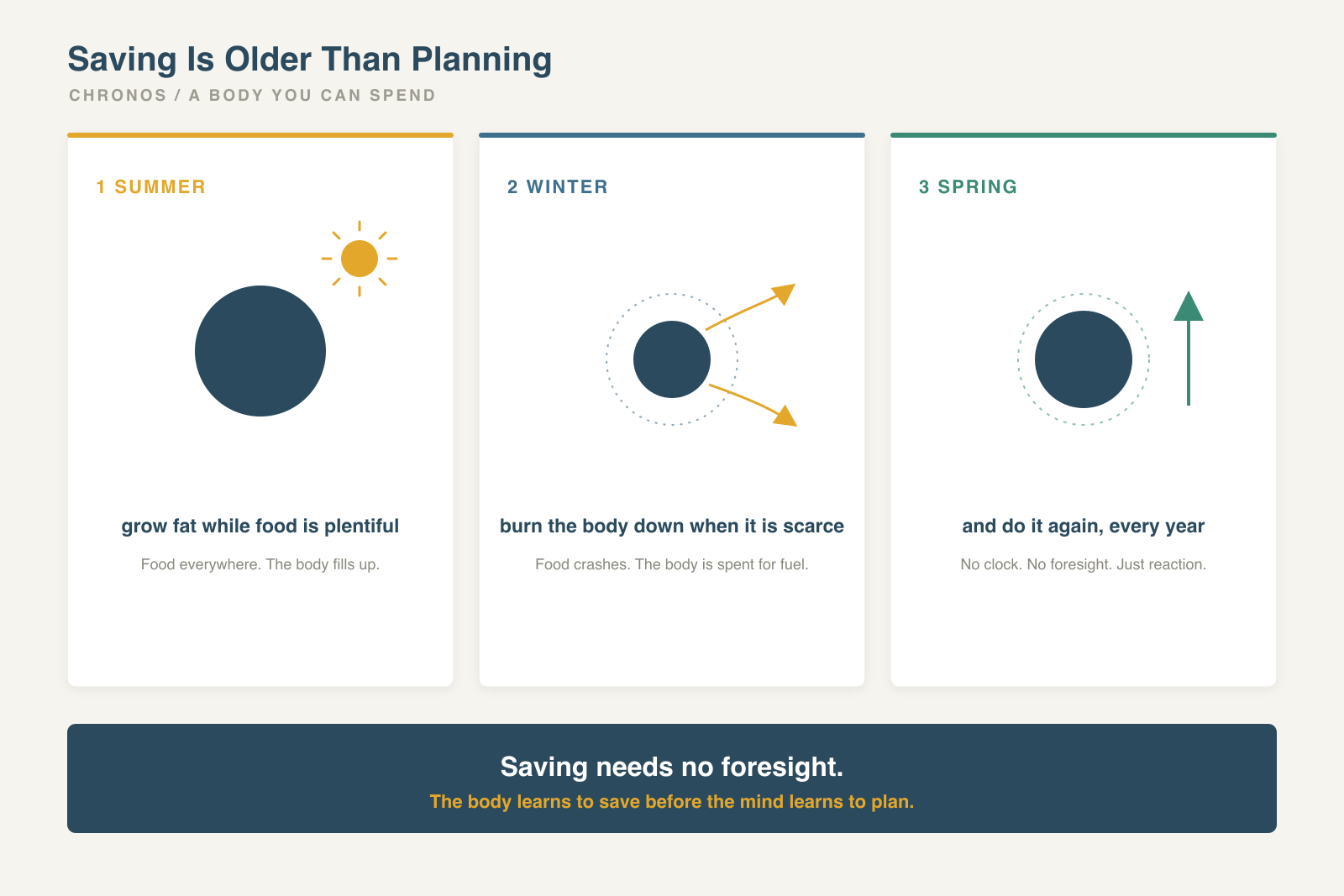
- Saving Is Older Than Planning For months I tried to teach my digital creatures to see winter coming. They never could. So I stopped working on the mind and gave them a body they could spend instead. They learned to grow fat in plenty and burn it in want, with no foresight at all. Saving, it turns out, is older than planning.