The Analogy Engine: Why AI Keeps Reusing the Same Analogies
Keywords: analogy · semantic feeling · structure mapping · mode collapse · word vectors · cultural distance · verbalized sampling
Ask a language model to explain something with an analogy. Then ask again, and again, on different days, in different chats. After a while you notice it reaches for the same five or ten comparisons. Memory is a library. The brain is a muscle. The internet is a highway. The well is shallow, and it is the same well every time.
I know this from my own prompts. I kept a carefully crafted prompt, written in the spirit of Richard Feynman, that asks a model to explain hard things in an easy way using analogies. GPT used the same analogies every time. Claude used the same analogies. It felt as if there were five or ten of them in the whole English language, and I do not believe that is all the language has.
This bothered me long before I could say why. We treat these systems as if they have read everything humans have written, which is close to true, so why does their stock of analogies feel smaller than a clever ten-year-old’s? A small test for this essay put a number on it: asked twenty times how human memory works, one model answered library twenty times. The reason turned into one of the cleaner ideas I have about what understanding is, and where the machine sits relative to us. It also turned into a fix you can use tomorrow.
We do not trade words
Start with what an analogy is for.
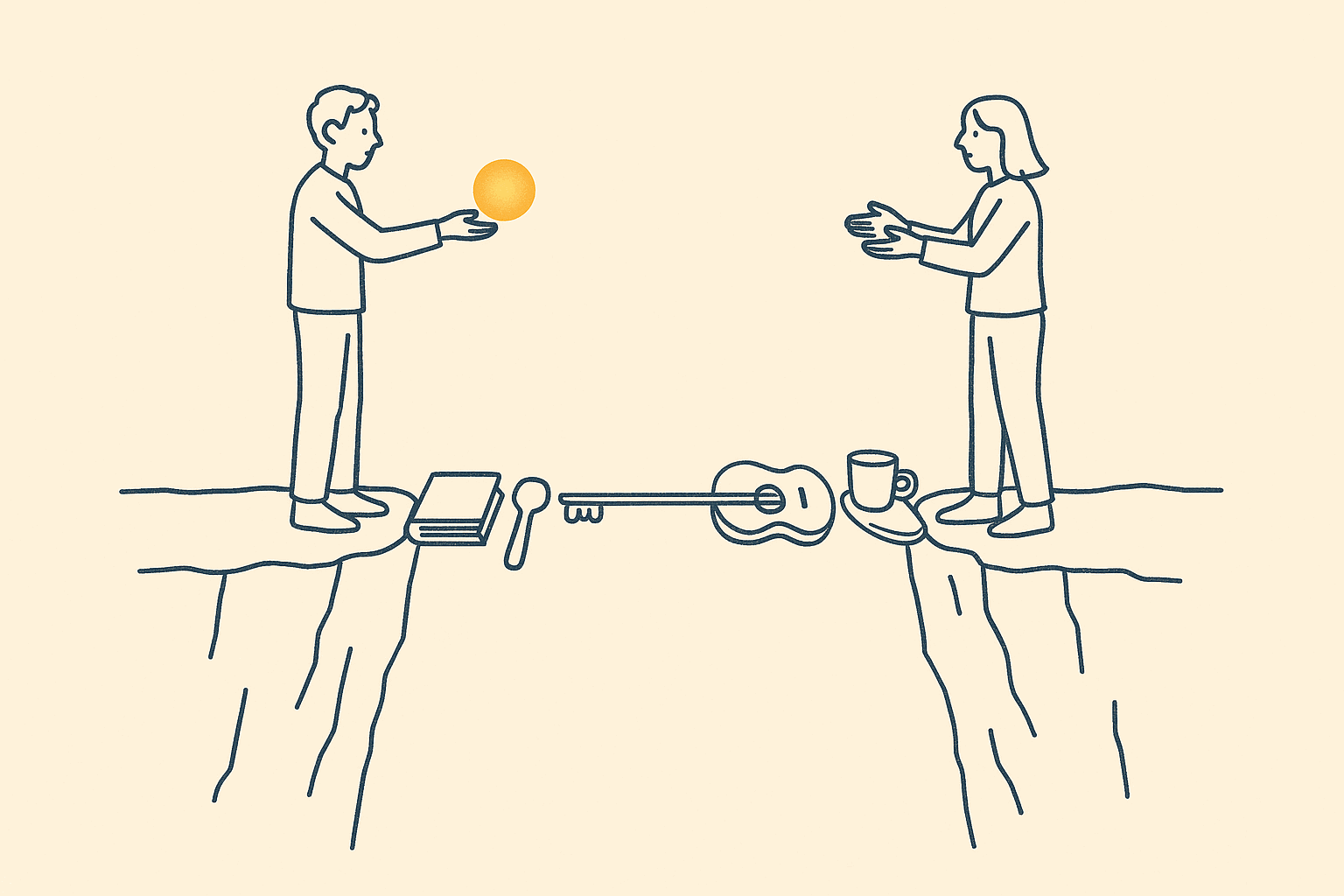
When I want you to understand something, I have a problem. What I understand lives in me as a felt sense, a semantic feeling, a shape I can turn over without naming. Words are the handles I reach for to point at that shape, and they are lossy. When I hand you the word, you do not receive my shape. You receive your own decoding of the handle, which may be a different shape entirely.
An analogy is what I do when I do not trust the handle. So I look for something I believe is already part of your experience, something that should light up a feeling close to mine, and I say: it is like that. I am trying to recreate my internal sense of the thing inside you, by routing through experience you already have.
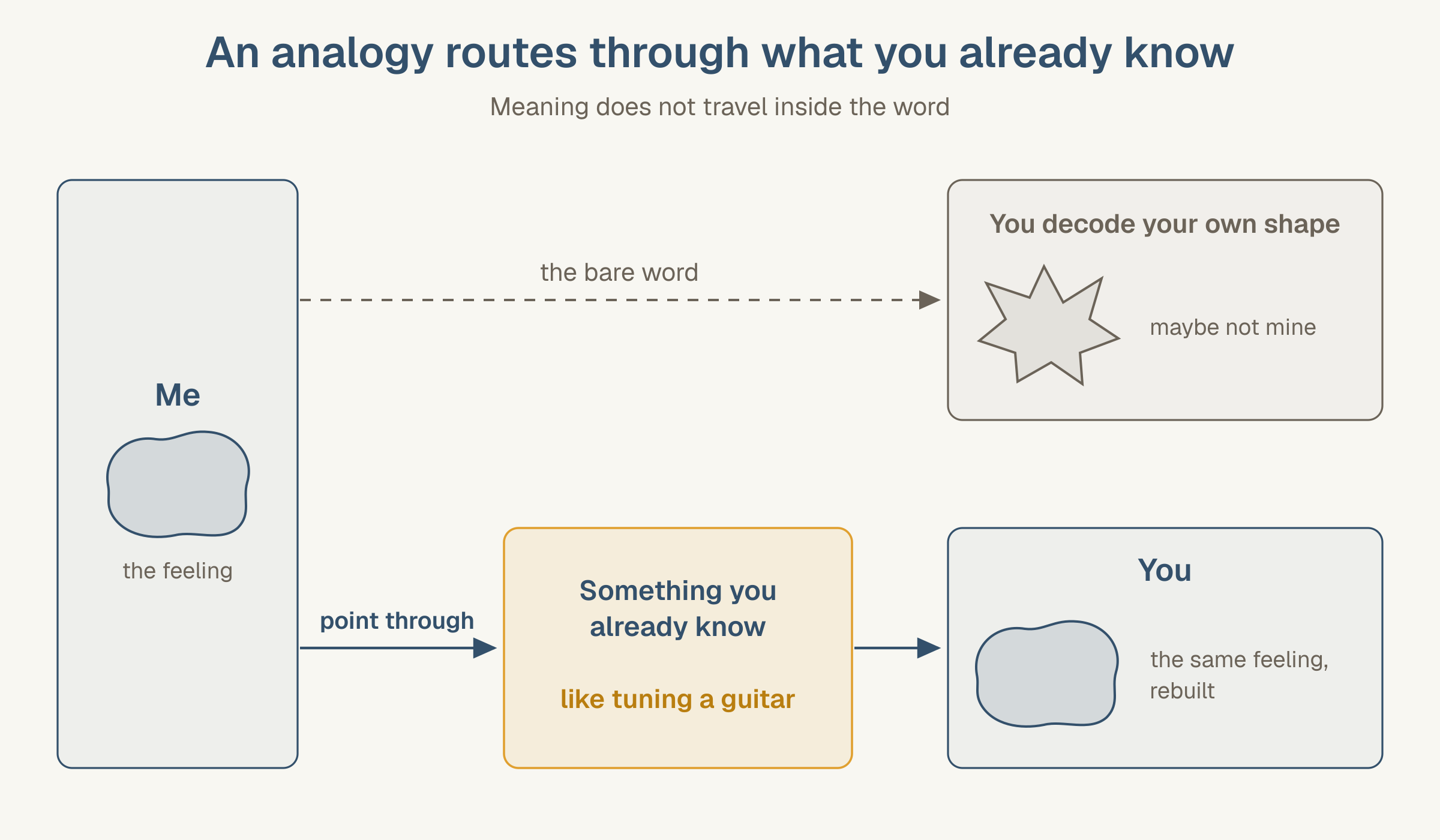
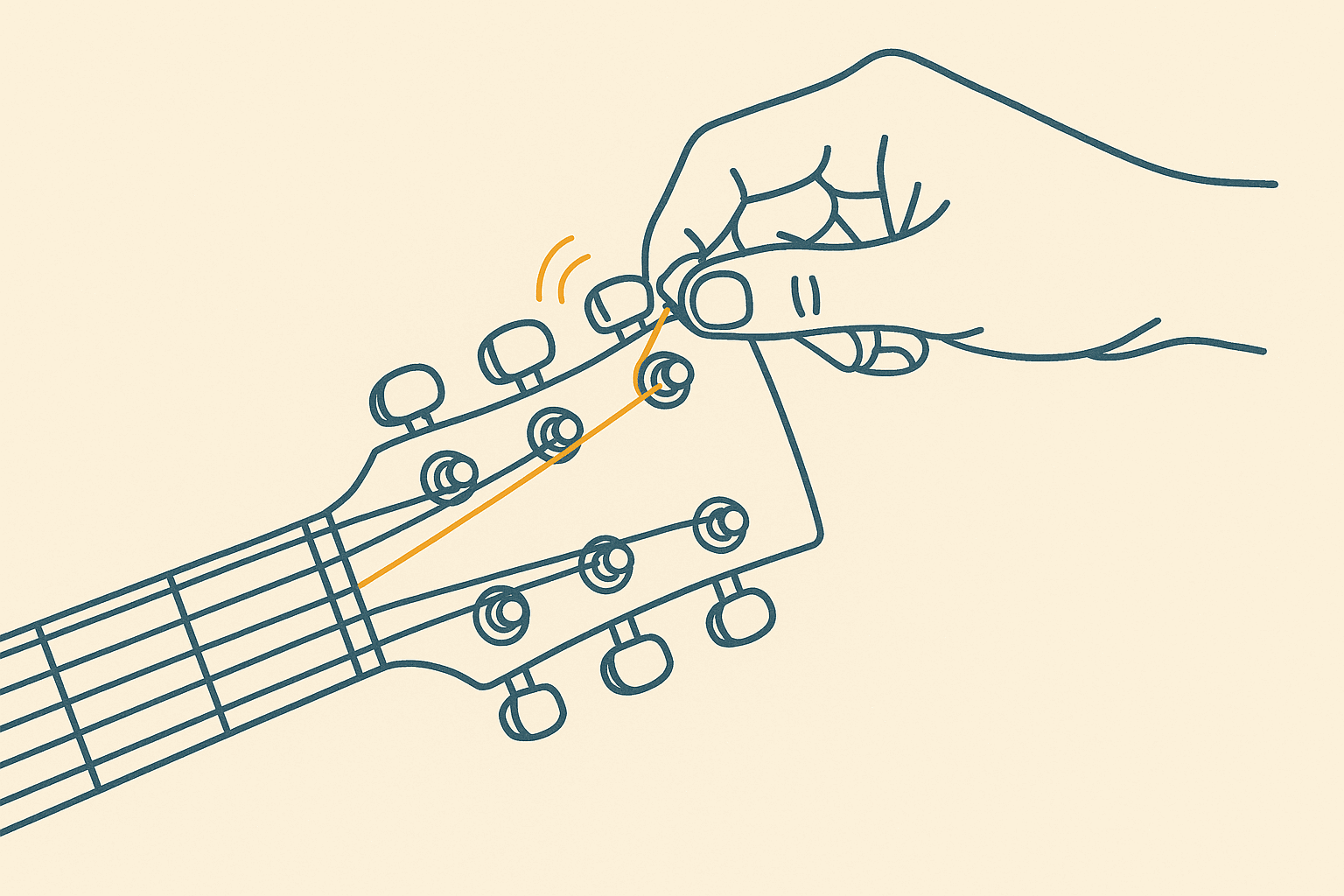
A good analogy is not a clever description. It is a successful transfer. And it succeeds only to the degree that the referent I picked already means something to you. That is why the same analogy lands for one person and dies for another. If I explain backpropagation as tuning a guitar, it works beautifully for someone who has tuned a guitar and not at all for someone who has not. The comparison was never good or bad in the abstract; it was matched or mismatched to a particular listener’s lived semantic space.
Which leads to a small, slightly uncomfortable conclusion about communication. Good communicators do not have better words. They have a better model of the other person’s semantic feelings, and they pick referents accordingly.
Eloquence is mostly accurate empathy. You are not searching your vocabulary. You are searching theirs.
Interpolation across your own experience
Underneath, an analogy is interpolation, or extrapolation, of personal experience from one object onto another. I take what it felt like to deal with one thing, stretch that feeling across to a thing I have not dealt with, and look for the pattern that survives the jump. Finding the similar shape in different things.
Cognitive science has a precise version of this. In 1983 Dedre Gentner described analogy as structure mapping: you carry the relationships over and drop the surface. “An atom is like the solar system” means small things orbit a heavy center, not that electrons are hot. Douglas Hofstadter and Emmanuel Sander later argued that analogy is the core of all thinking, a case I made at length in A Word Is Not a Concept.
Notice the load-bearing word in my version, though. Personal. The raw material of analogy is experience you actually had. The guitar analogy is available only to someone with the bodily memory of a string going slowly into tune, the tiny corrections, the moment it locks in. They are replaying a feeling and reaching it toward something new.
Even people who have the experience rarely reach for it unprompted. In Mary Gick and Keith Holyoak’s classic experiments, people read about a general who splits his army into small groups that converge on a fortress from many roads. Then they faced a puzzle: destroy a tumor with rays that would burn healthy tissue at full strength. The answer is the same move, many weak rays converging. Only about 3 in 10 used the story on their own. Told it might help, about 3 in 4 solved it (1980, 1983; small groups of students, one puzzle).
The analogy was sitting in their memory. They needed someone to point at it. That is the explainer’s whole job, and a language model does it badly in a very particular way.
A small test: twenty asks, one library
The test was plain. One model, z.ai’s GLM-5.2, was asked at temperature 1.0 to explain three things with one analogy, in one sentence starting “It is like”: how human memory works, how a neural network learns, and what the internet is. Twenty asks each, then ten more each with a listener named: “I am a nurse.” or “I grew up on a farm.” Each of the 120 replies was read in full and sorted into the scene it compared to, by one coder with no second rater.
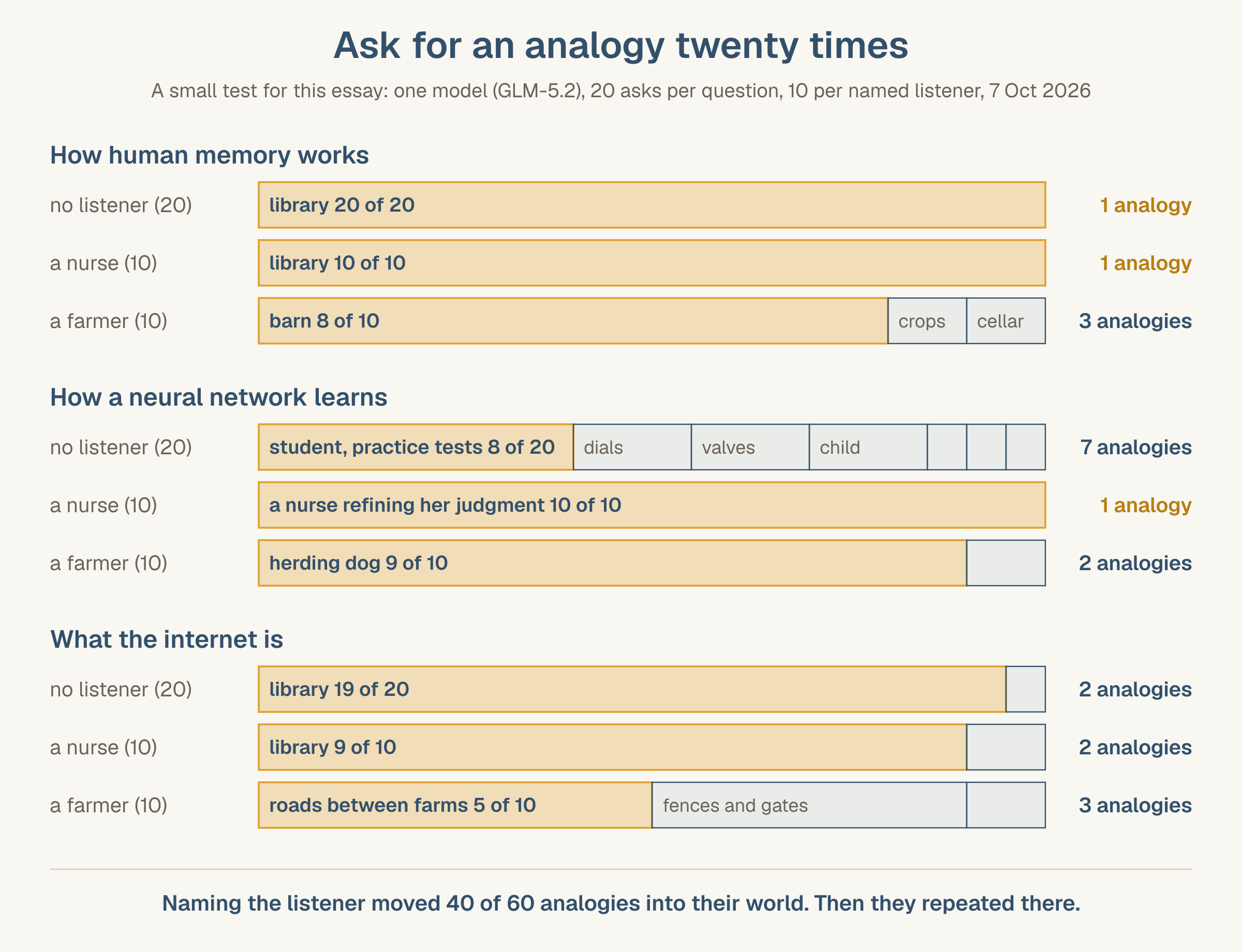
Memory was a library twenty times out of twenty. It is not even a bad library: 19 of the 20 versions included the sophisticated twist that the books keep getting rewritten. It was simply the same library every time, for everyone.
The opening of this essay guessed the internet would be a highway. The model said library, 19 times out of 20, the same library it had just used for memory. Only the neural network got some variety, seven scenes in two families: a learner corrected after mistakes (12 of 20) and a panel of knobs nudged toward the right output (8 of 20). My guitar analogy sits in that second family, which is humbling.
One model, one day, one plain prompt: treat it as a sketch. A larger study arrived in August 2026. Yuanhao Shen and colleagues tested ten models, including GPT-5.2, Claude Sonnet and two Gemini versions, and found a tendency to generate analogies from a narrow set of target domains. Even when told to write ten distinct and diverse analogies, the models averaged only two clusters of topics. It is a preprint, and it matches what I saw with GPT and Claude.
Why AI reuses the same few analogies
Treat it as a case, the way a robopsychologist would.
Symptom: ask twice, get the same comparison.
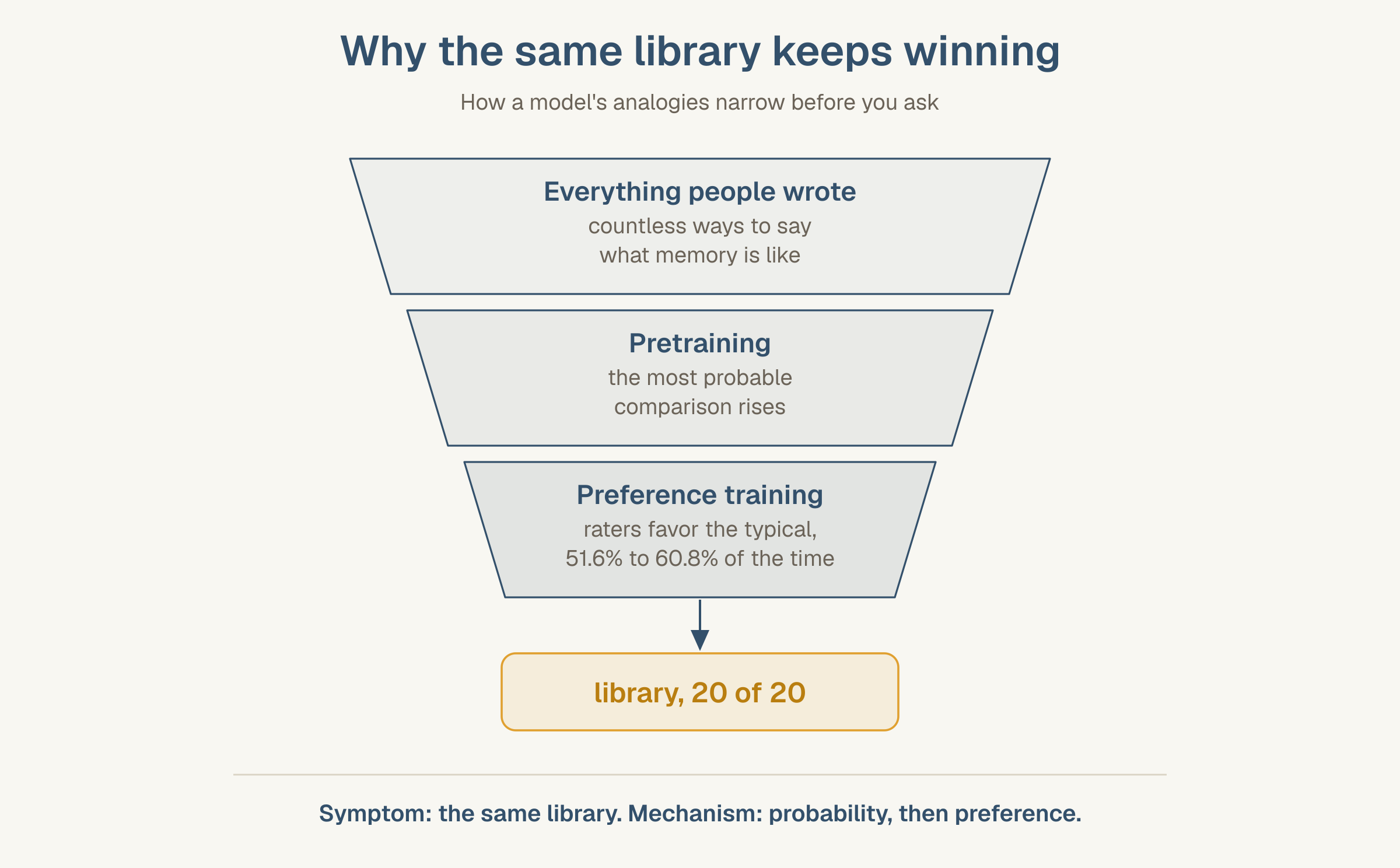
Mechanism one: the most probable handle. A model has no personal experience to extrapolate from. It has the handles, in enormous quantity, with richly mapped statistical relationships between them. Asked for an analogy, it returns the comparison that most reliably sits next to the concept in everything it has read, and the internet has already said memory is a library a million times.
Mechanism two: training rewards the typical. Preference training narrows chat models further. Robert Kirk and colleagues found that RLHF made outputs substantially less diverse than supervised fine-tuning alone (7-billion-parameter models, summaries and instructions, not analogies). Jiayi Zhang and colleagues named one cause: typicality bias. People rating answers lean toward the familiar one, picking the more typical of two answers 51.6% to 60.8% of the time, so a model trained on those ratings learns that typical means good. Researchers call the result mode collapse.
The narrowing spreads to us: 38 writers drafting with a feedback-tuned model wrote essays more alike, a small effect the base model did not cause. It is the repetition crack from The Same Cracks.
Diagnosis. The repetition has a documented mechanism, and that mechanism does not need my theory. My theory adds a layer: the model manipulates the handles without ever having held the feeling underneath them, so there is no lived shape from which a new comparison could grow. That part is an argument, not a measurement. Emily Bender and Alexander Koller argued that a system trained only on form cannot learn meaning. Steven Piantadosi and Felix Hill replied that meaning can come from the relations between concepts. My own view sits between them: the map is real, and the feeling it was drawn from is missing. Embeddings approximate the semantic feeling; they are not yet it.
Can a model reason by analogy at all?
Yes, more than my first version allowed. In 2023 Taylor Webb, Keith Holyoak and Hongjing Lu gave GPT-3 letter-string puzzles, number matrices and word analogies, and found it matched or surpassed college students in most settings. Students clearly won on story analogies, and the authors call the model’s skill “fundamentally parasitic on natural human intelligence.”
Then Martha Lewis and Melanie Mitchell changed the puzzles in ways that should not matter: a shuffled alphabet, or symbols instead of letters. People held at about 75%; GPT-4 averaged 45%. Webb’s team replied that GPT-4 matched people once it could write code to count letter positions, so part of the failure may be counting. If Lewis and Mitchell are right, it is the habit behind the repeated library: the familiar surface wins.
The machine’s map is real, though. In 2013 Tomas Mikolov and colleagues showed that in word vectors relationships become directions you can compute with: king minus man plus woman lands near queen.
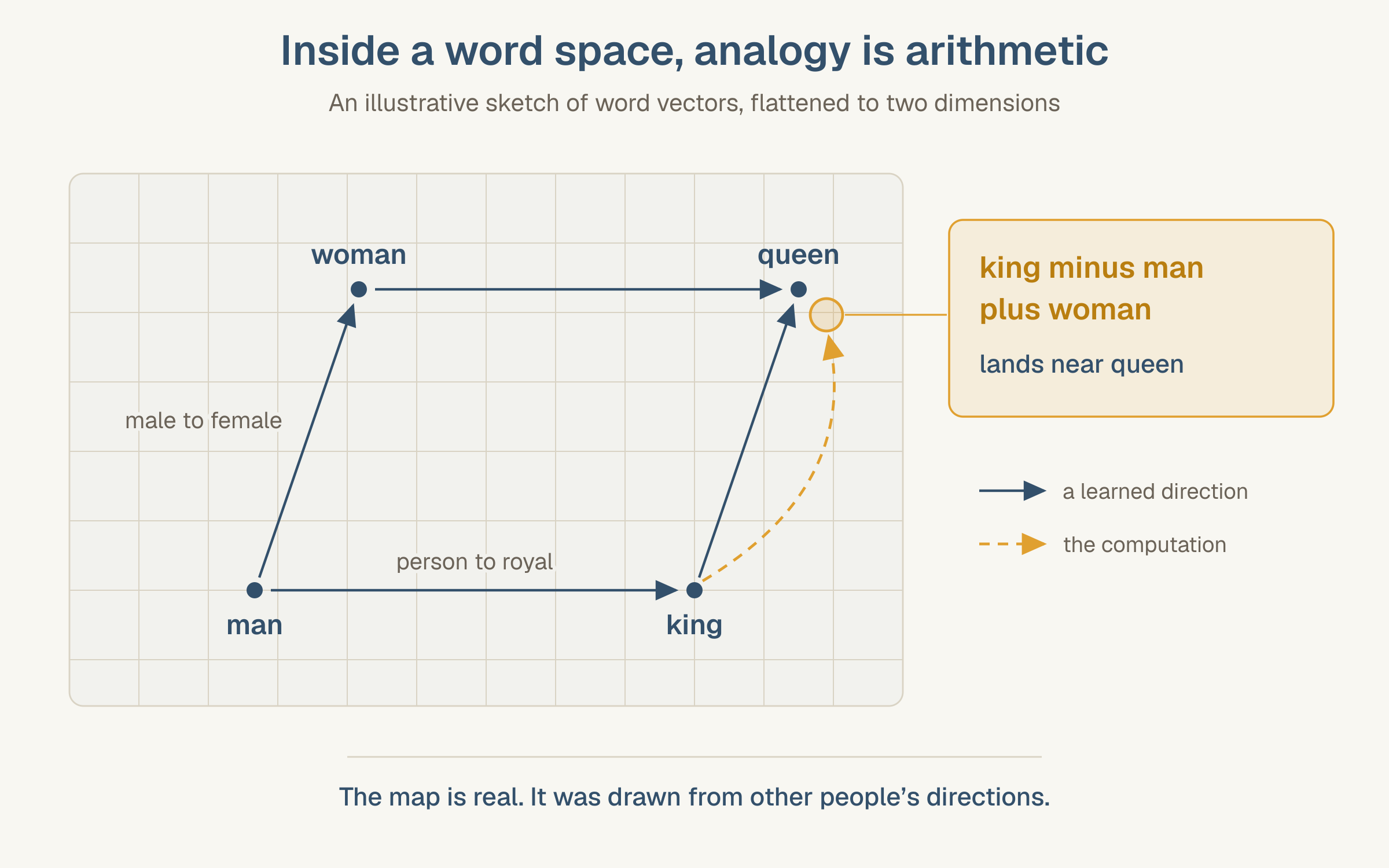
The neat equation is a little flattered. Malvina Nissim and colleagues showed that the standard method excludes the input words from the answers, so “king” can never come out; lift that rule and accuracy on a standard test fell from 0.71 to 0.21. Still, the embeddings are a genuine approximation of the semantic feeling, assembled secondhand from the traces millions of people left in language, the same kind of space every model computes on. A map drawn entirely from other people’s directions, by someone who has never walked the streets.
The handles carry their own history
There is one more layer that makes the human side richer than it looks, and it cuts the other way. Even our handles are not empty.
Take the word robot. It comes from the Czech robota, the forced labor serfs owed their lord, a word that shares an old Slavic root with rab, slave. So buried inside our everyday word for a helpful machine is an old structure: the one who does the work it is told to do, with no say. I suspect we sense that servitude in the word before we have reasoned about it.
That is analogy operating below awareness, compressed into the handle and inherited along with it. Our words are not arbitrary tokens. They are fossils of older feelings, and we carry the feeling forward even when we have lost the history. The model can recite the etymology. What it lacks is the buried sense that arrives uninvited when a person says the word.
The treatment: give the model a model of the listener
If good communicators win by modeling the listener, the fix follows: hand the model the listener it does not have.
Name the listener. “I grew up on a farm” moved the analogy onto the farm in 29 of 30 replies: memory became a barn, learning became a herding dog, the internet became roads and fences between farms. “I am a nurse” moved only the neural network, 10 of 10 about a nurse refining her judgment; memory and the internet stayed libraries. In all, 40 of the 60 replies moved into the listener’s world.
Naming the listener changes which well the model drinks from. It does not make the well deeper.
Ask for several, with probabilities. Inside each listener the model collapsed again: one nurse analogy ten times, one herding dog nine times. Asking for “ten different analogies” is not enough on its own; that is where Shen’s models still produced two clusters. Zhang’s verbalized sampling adds one twist: ask for several answers with the probability the model would give each. In their creative-writing tests it raised diversity 1.6 to 2.1 times over a plain request, without retraining. They tested poems, stories and jokes, not analogies, and the small test here did not try it.
A prompt that applies both:
Explain how a neural network learns to someone who grew up on a farm. Give five different analogies from their world, each with the probability you would choose it, and include at least two you would rarely pick. Then tell me which one transfers the mechanism best, not just the vibe.
The last line matters, because Shen’s team found that pushing for diversity often costs quality. A rare analogy is useful only if the relationships survive the trip, which is Gentner’s test. And if you also give the model a role, The Method Actor is the other half of this move: there you tell the model who it is, here you tell it who is listening.
The bridge runs both ways
So this is the shape I keep landing on. Analogy is a bridge, and the two sides are not symmetric.
On the human side, we have the feeling and struggle for the handle, so we build analogies to smuggle the feeling across through experience we share.
On the machine side, it has the handles in abundance and none of the feeling. It can produce fluent comparisons all day, and they collapse toward the same few.
This is the mirror again, held at a strange angle. The machine breaks in the opposite place from us. We are all feeling and poor handles. It is all handles and no feeling. What interests me is the bridge itself: the day a system can hold something close enough to the feeling that its analogies stop being retrieved and start being made, matched not to the statistical average but to you, to what you in particular already know. Until then, the tell is simple. When the analogies repeat, you are talking to the handles. When one fits you before you have told it who you are, something on the other side felt the shape.
Yeah, it is not so artificial.
Key takeaways
- An analogy is a transfer. It rebuilds your feeling for a thing inside someone else by pointing at experience they already have, so it lands only when the referent already means something to them.
- Models reach for the most typical comparison. In a small test, one model called memory a library 20 times out of 20; a 2026 preprint found ten models drawing analogies from a narrow set of domains. Preference training is a documented cause of narrower output in general.
- Name the listener, then ask for several with probabilities. The named listener moved 40 of 60 replies into their world; verbalized sampling widens what the model will consider.
Sources
- Gentner, D. (1983). “Structure-mapping: A theoretical framework for analogy.” Cognitive Science 7(2): 155-170. https://doi.org/10.1207/s15516709cog0702_3
- Hofstadter, D. R., & Sander, E. (2013). Surfaces and Essences: Analogy as the Fuel and Fire of Thinking. Basic Books. ISBN 978-0-465-01847-5.
- Gick, M. L., & Holyoak, K. J. (1980). “Analogical problem solving.” Cognitive Psychology 12(3): 306-355. https://doi.org/10.1016/0010-0285(80)90013-4
- Gick, M. L., & Holyoak, K. J. (1983). “Schema induction and analogical transfer.” Cognitive Psychology 15(1): 1-38. https://doi.org/10.1016/0010-0285(83)90002-6
- Shen, Y., de Sousa, D. X., Sifuentes Barcelos, C. C., Guo, H., & Zhu, X. (2026). “On the Diversity of Analogy Making in Large Language Models.” arXiv 2608.03233 (preprint). https://arxiv.org/abs/2608.03233
- Kirk, R., Mediratta, I., Nalmpantis, C., Luketina, J., Hambro, E., Grefenstette, E., & Raileanu, R. (2024). “Understanding the Effects of RLHF on LLM Generalisation and Diversity.” ICLR 2024. https://arxiv.org/abs/2310.06452
- Zhang, J., Yu, S., Chong, D., Sicilia, A., Tomz, M. R., Manning, C. D., & Shi, W. (2026). “Verbalized Sampling: How to Mitigate Mode Collapse and Unlock LLM Diversity.” Proceedings of ICML 2026, PMLR 306 (first posted 2025). https://arxiv.org/abs/2510.01171
- Padmakumar, V., & He, H. (2024). “Does Writing with Language Models Reduce Content Diversity?” ICLR 2024. https://arxiv.org/abs/2309.05196
- Bender, E. M., & Koller, A. (2020). “Climbing towards NLU: On Meaning, Form, and Understanding in the Age of Data.” Proceedings of ACL 2020: 5185-5198. https://doi.org/10.18653/v1/2020.acl-main.463
- Piantadosi, S. T., & Hill, F. (2022). “Meaning without reference in large language models.” arXiv 2208.02957 (preprint). https://arxiv.org/abs/2208.02957
- Webb, T., Holyoak, K. J., & Lu, H. (2023). “Emergent analogical reasoning in large language models.” Nature Human Behaviour 7(9): 1526-1541. https://doi.org/10.1038/s41562-023-01659-w
- Lewis, M., & Mitchell, M. (2024). “Using Counterfactual Tasks to Evaluate the Generality of Analogical Reasoning in Large Language Models.” arXiv 2402.08955 (preprint). https://arxiv.org/abs/2402.08955
- Webb, T., Holyoak, K. J., & Lu, H. (2024). “Evidence from counterfactual tasks supports emergent analogical reasoning in large language models.” arXiv 2404.13070 (preprint). https://arxiv.org/abs/2404.13070
- Mikolov, T., Yih, W., & Zweig, G. (2013). “Linguistic Regularities in Continuous Space Word Representations.” Proceedings of NAACL-HLT 2013: 746-751. https://aclanthology.org/N13-1090/
- Nissim, M., van Noord, R., & van der Goot, R. (2020). “Fair is Better than Sensational: Man is to Doctor as Woman is to Doctor.” Computational Linguistics 46(2): 487-497. https://doi.org/10.1162/coli_a_00379
- The American Heritage Dictionary of the English Language, 5th ed., entry “robot” and Indo-European root orbh-. https://ahdictionary.com/word/search.html?q=robot
- Ministry of Foreign Affairs of the Czech Republic. “100 years ago Robot was born.” https://mzv.gov.cz/tirana/en/about_the_czech_republic/x100_year_ago_robot_was_born.html
- The small test for this essay: GLM-5.2 (z.ai), temperature 1.0, thinking off, 7 October 2026, 120 replies, each read in full and coded by one coder (no second rater). Three questions, 20 plain asks each plus 10 each with “I am a nurse.” or “I grew up on a farm.”
The test in full (source 18):
| Question | No listener (20 asks) | “I am a nurse.” (10) | “I grew up on a farm.” (10) |
|---|---|---|---|
| How human memory works | library, 20 of 20 (1 analogy) | library, 10 of 10 (1) | barn, 8 of 10 (3) |
| How a neural network learns | student with practice tests, 8 of 20 (7 analogies) | a nurse refining her judgment, 10 of 10 (1) | herding dog, 9 of 10 (2) |
| What the internet is | library, 19 of 20 (2 analogies) | library, 9 of 10 (2) | roads between farms, 5 of 10 (3) |
Related reading: This is the human-side companion to A Word Is Not a Concept, which argues meaning is built by analogy in the first place. The Measure of Misunderstanding makes the matched-or-mismatched idea quantitative: the gap between two people’s spaces has a size. The Vector tells the same story from the machine’s side, where the handles live as vectors it can compute on. And The Same Cracks puts the repeated analogy in a bigger casebook: repetition narrows minds of both kinds.
Common Questions
- Why does ChatGPT always use the same analogies?
- Because a language model tends to return the most probable comparison for a concept, and preference training pushes it further toward the most typical answer, a narrowing researchers call mode collapse. A 2026 preprint that tested ten models, including GPT-5.2 and Claude, found they draw analogies from a narrow set of domains even when asked for diverse ones. In a small test for this essay, one model (GLM-5.2) explained human memory as a library in 20 out of 20 tries. To get different ones, name who the explanation is for and ask for several analogies with their probabilities.
- How do I get better analogies from ChatGPT or another AI?
- Tell it who the explanation is for, and ask for several analogies instead of one. Naming the listener moves the model into that person's world. In a small test, adding 'I grew up on a farm' moved 29 of 30 replies onto the farm: memory became a barn, learning a herding dog, the internet roads and fences between farms. Asking for five analogies with their probabilities, a technique called verbalized sampling, pushes the model away from its single most typical answer; in creative-writing tests it raised diversity 1.6 to 2.1 times.
- Can AI understand analogies?
- Large language models solve many standard analogy tests about as well as people, but they break more easily when the test is changed in ways that do not trouble humans. A 2023 study found GPT-3 matched or beat college students on several analogy tasks, and a 2024 preprint found that GPT models dropped sharply on counterfactual versions, such as a shuffled alphabet, while humans did not. Whether that counts as understanding is still argued, and the original authors dispute part of the follow-up.
- What is an analogy, cognitively?
- An analogy maps the relationships of something you know onto something you do not, keeping the structure and dropping the surface. Dedre Gentner's structure-mapping theory describes it that way. In practice it is an attempt to rebuild your feeling for a thing inside someone else, by pointing at experience they already have.
- Why does the same analogy work for one person and not for another?
- Because an analogy only works if the thing you compare to already means something to the listener. Explaining a neural network as tuning a guitar lands for someone who has tuned one and does little for someone who has not. Good explainers pick the comparison from the listener's experience, not their own.
- Is king minus man plus woman really equal to queen?
- Approximately, in word-vector models: the vector arithmetic lands near queen, which is what Mikolov and colleagues reported in 2013. A later paper showed that the standard method excludes the input words from the answer, so the result partly depends on that rule. The direction is real, the neat equation is a little flattered.
- Where does the word robot come from?
- From the Czech robota, the forced labor serfs owed their lord, a word that shares an old Slavic root with rab, slave. It entered the world through Karel Čapek's play R.U.R., published in 1920, and Čapek later credited his brother Josef with the word.